If your tap water contains free chlorine, leaving it standing with good aeration can allow chlorine to dissipate. The RSPCA notes 24 hours as an option for chlorine, while other aquarium guidance points out that complete dissipation can take longer depending on conditions. Chloramine is much more stable and does not reliably disappear just by standing. For routine aquarium use, the dependable approach is to use a conditioner that neutralises the disinfectant used by your water supplier.
The old advice to leave a bucket of tap water overnight came from an era when free chlorine was the main disinfectant. That advice is incomplete today because some supplies use chloramine, which is deliberately more persistent.
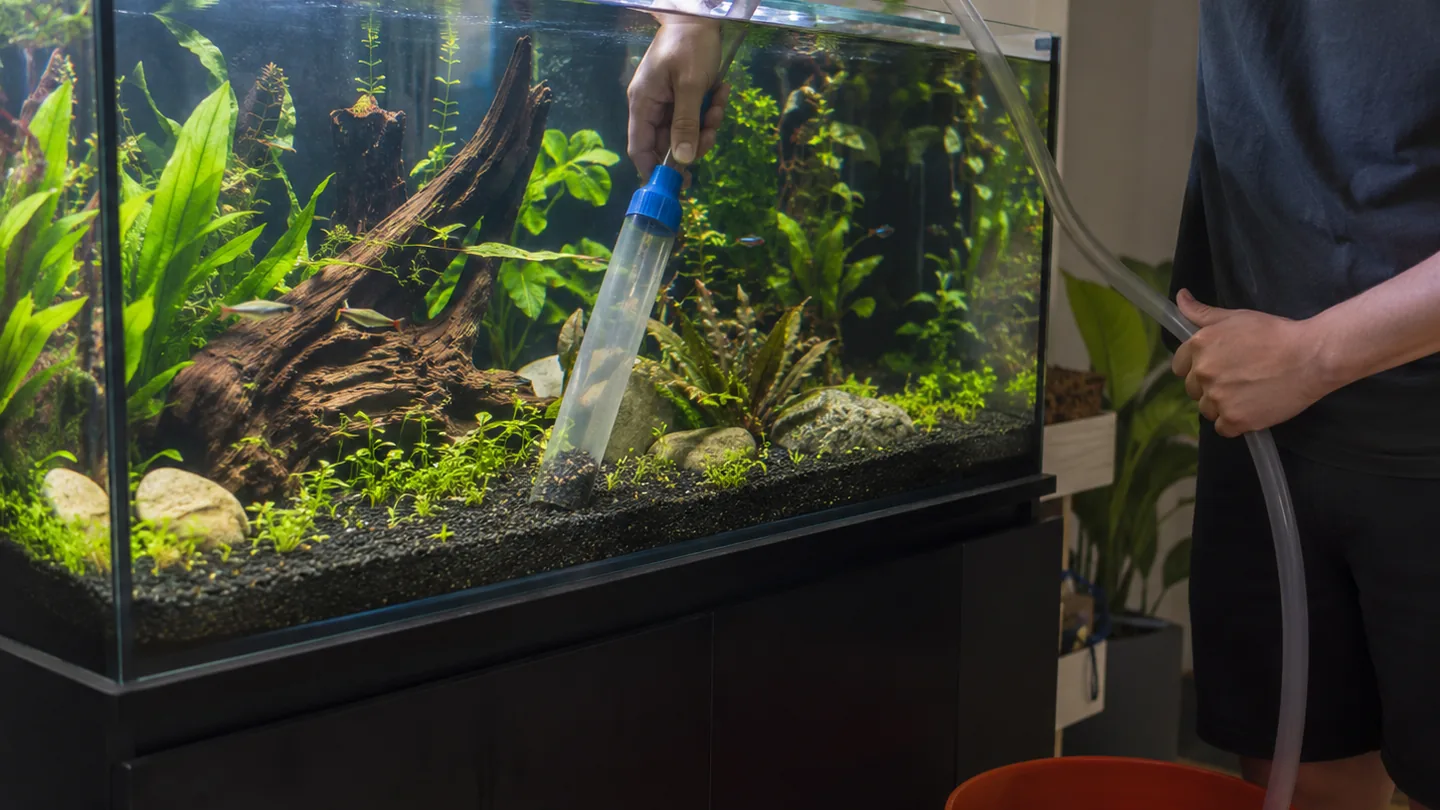
Standing water can remove free chlorine
Free chlorine is volatile and can leave water when it is exposed to air. Aeration, surface movement and time all speed that process.
That is why standing water can work when you know the supply contains chlorine only.
Chloramine changes the answer
Chloramine is more stable than free chlorine and is not reliably removed by simply leaving a bucket overnight. If your supplier uses chloramine, use a conditioner specifically rated to neutralise it.
Do not guess which disinfectant is present when fish or biological media are at risk.
Why conditioner is usually the better routine
- It works quickly.
- It avoids the uncertainty of evaporation time.
- It can handle chloramine when the product is designed for it.
- It makes large water changes practical without storing buckets for days.
If you choose to stand water
Verify the water supplier uses free chlorine, aerate the container and keep it clean and covered against contamination while still allowing gas exchange. Test for residual chlorine if you want confirmation.
Match temperature before adding the water to the aquarium.
Do not confuse ageing water with conditioning water
Letting water sit may change dissolved gases and pH as it equilibrates with air, but that does not guarantee removal of every substance relevant to fishkeeping. Treat disinfectants and water chemistry as separate issues.
Related aquarium tools and guides
Frequently asked questions
Is 24 hours enough for tap water?
It may be enough for free chlorine under suitable conditions, but it is not a reliable method for chloramine.
Does boiling remove chlorine?
Boiling can drive off free chlorine, but it is impractical for aquarium-sized water changes and still does not replace understanding the source water.
Should I still use conditioner after standing water?
If you are unsure whether chloramine is present, yes. A suitable conditioner removes that uncertainty.
Sources and further reading
This guide separates general aquarium arithmetic from fish-welfare decisions. For species-specific limits, always check the needs of the fish you intend to keep.