An aquarium can support nitrifying bacteria on substrate, plants, rocks and other wet surfaces even without a conventional filter. However, filters concentrate high-surface-area media in continuous oxygenated flow, making biological capacity more predictable. A deliberately filterless planted aquarium needs strong plant growth, sensible stocking, gas exchange and close water testing; simply removing the filter does not create a self-sustaining system.
The nitrogen cycle is a microbial process, not a piece of equipment. That means a filter is not chemically mandatory. In practice, though, filters make the process much more reliable by combining circulation, oxygenation, mechanical debris removal and a large protected area for biofilm.
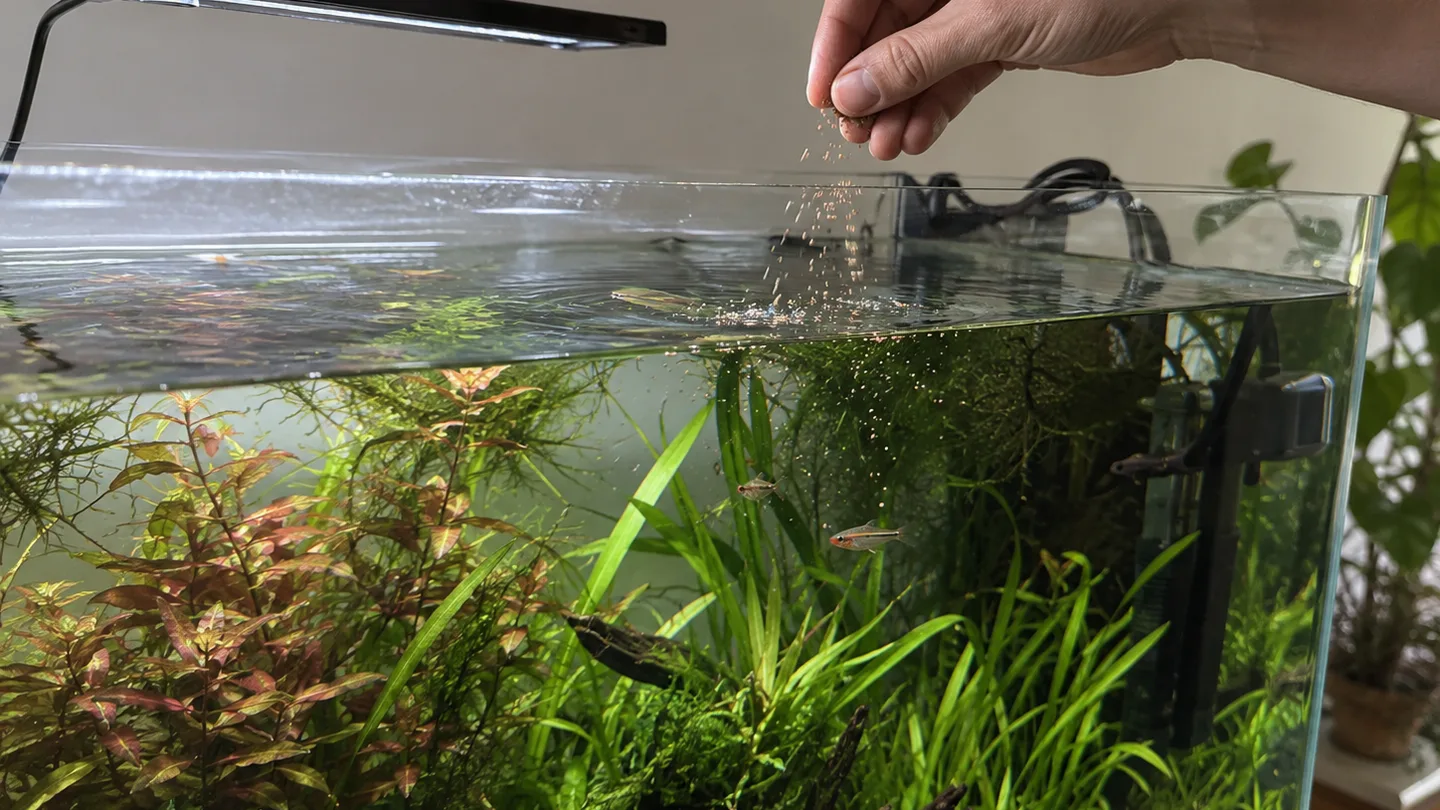
Where bacteria live without a filter
Nitrifying organisms colonise substrate grains, rock, wood, plant leaves and the aquarium walls. Any wet surface with oxygen and access to dissolved waste can support some biofilm.
The problem is not whether bacteria can exist; it is whether enough active surface area exists for the planned livestock load.
Why filters make cycling easier
- Continuous flow brings ammonia and nitrite to the biofilm.
- Oxygenated water supports aerobic nitrification.
- Porous media provides large surface area in a compact space.
- Mechanical media captures solids before they break down further.
- The biological population is easier to preserve during tank cleaning.
What a filterless system needs instead
Heavily planted low-stock systems can rely more on plant nitrogen uptake and distributed biofilm, but circulation and gas exchange still matter.
Use conservative stocking and test ammonia and nitrite after any change in plant health or bioload.
Do not remove a mature filter suddenly
If an established tank has relied on its filter for months, removing it can remove a major share of the biological community and circulation at once.
Transition gradually only if you deliberately redesign the system and can verify water quality throughout.
Related aquarium tools and guides
Frequently asked questions
Will a bowl cycle without a filter?
Microbial biofilm will develop, but small unfiltered containers are chemically unstable and generally poor permanent homes for fish.
Can plants replace a filter?
In some heavily planted low-stock systems plants can handle much of the nitrogen load, but they do not automatically replace circulation, oxygenation and mechanical filtration.
Can I cycle a tank first and add a filter later?
You can, but adding the final filter from the start gives bacteria time to colonise the media you intend to rely on.
Sources and further reading
This guide separates general aquarium arithmetic from fish-welfare decisions. For species-specific limits, always check the needs of the fish you intend to keep.