Gravel is a practical planted-tank substrate when the grains are not excessively large and root feeders receive nutrients. Amazon swords, Cryptocoryne and Vallisneria are dependable rooted choices. Stem plants can also root in gravel, while Java fern, Anubias and mosses avoid substrate limitations by attaching to rocks and wood.
You do not need expensive aquasoil to grow common aquarium plants. Gravel is stable, reusable and easy to fertilise locally.
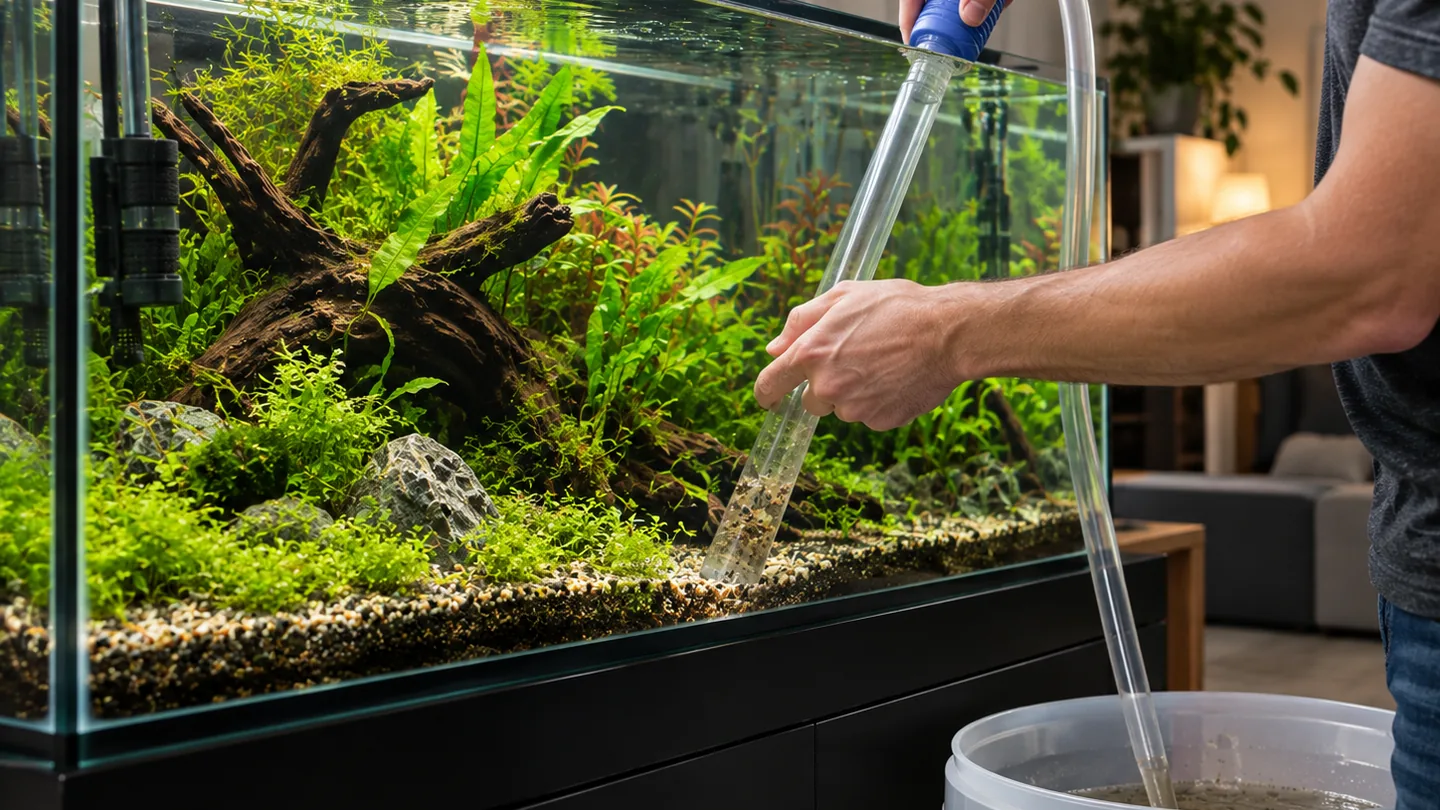
Rooted plants that suit gravel
- Amazon sword: large heavy root feeder.
- Cryptocoryne: many sizes and colours for foreground to midground.
- Vallisneria: spreads by runners and suits the background.
- Water wisteria: adaptable stem plant that can root or float.
Use the right grain size
Very large stones leave wide gaps and can make anchoring difficult. Medium or fine aquarium gravel gives roots more contact while still allowing water movement between grains.
Feed the root zone
Inert gravel contributes little plant nutrition on its own. Root tabs turn the gravel into an effective planting medium without changing the whole water column.
Use hardscape plants where depth is limited
Java fern and Anubias do not need buried roots. Attach them to rock or driftwood and keep the rhizome exposed.
Gravel is easy to refresh
Unlike active soil, inert gravel does not gradually turn to mud. You can vacuum it, rearrange it and reuse it while replenishing plant nutrients separately.
Related aquarium tools and guides
Frequently asked questions
Can aquarium plants grow in plain gravel?
Yes. Many common species do very well when root and water-column nutrients are supplied appropriately.
Do root tabs work in gravel?
Yes. They are especially useful for swords, crypts and plants that feed heavily through roots.
Is fine gravel better for plants?
Usually easier than very coarse stones because roots can anchor more securely, but avoid material so fine that it behaves like compacted sand.
Sources and further reading
This guide separates general aquarium arithmetic from fish-welfare decisions. For species-specific limits, always check the needs of the fish you intend to keep.