Betta tanks benefit from live plants that create shade, visual barriers and broad leaves without sharp edges. Java fern and Anubias are easy hardscape plants, Cryptocoryne gives low to medium foreground cover, Java moss adds fine shelter and controlled floating plants soften the light. Leave open surface access because bettas regularly breathe atmospheric air.
The best betta planting is not simply the densest planting. It creates calm cover while preserving swimming space and access to the surface.
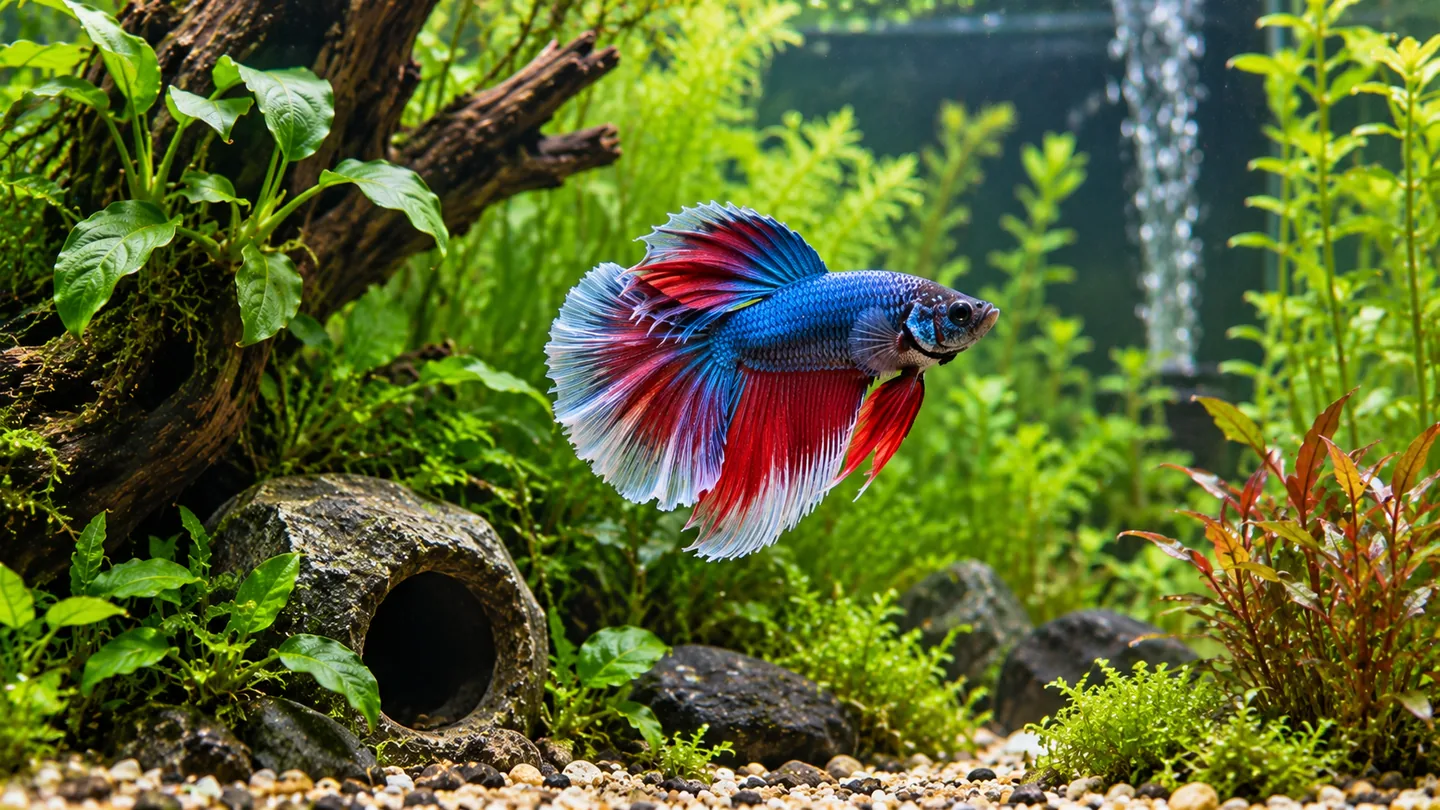
Easy hardscape plants
- Anubias for broad sturdy leaves and shade.
- Java fern for tall cover without demanding substrate.
- Java moss for fine texture and shelter around wood or rock.
Rooted choices
- Cryptocoryne for low or medium clumps.
- Amazon sword in larger betta tanks where the plant has room.
- Vallisneria for a planted background in sufficiently large aquariums.
Floating plants can help
A partial layer of floaters can soften bright light and make the upper water feel sheltered. Keep clear patches so the betta can surface easily and food can be delivered cleanly.
Avoid sharp artificial substitutes
If live plants are mixed with artificial decor, make sure nothing has hard sharp points that can snag long fins. Soft live leaves are usually the safest structure.
Choose plants that match your lighting
A low-light betta tank does not need demanding carpeting plants. Easy slow-growing species often suit the relaxed layout better.
Related aquarium tools and guides
Frequently asked questions
Do bettas need live plants?
They can live without them, but live plants provide natural cover, resting areas and environmental enrichment.
Can bettas live with floating plants?
Yes, as long as open surface access remains.
Is Anubias safe for bettas?
Yes. Its broad leaves are commonly used as resting and cover surfaces in betta tanks.
Sources and further reading
This guide separates general aquarium arithmetic from fish-welfare decisions. For species-specific limits, always check the needs of the fish you intend to keep.