Anubias is one of the easiest freshwater aquarium plants. It grows slowly, tolerates low light and does not need injected CO2. The rhizome must remain exposed, so the plant is usually attached to wood or rock. Because growth is slow, excessive light often produces algae on the leaves faster than the plant can outgrow it.
Anubias rewards restraint. More light and more fertiliser do not automatically make it grow quickly.
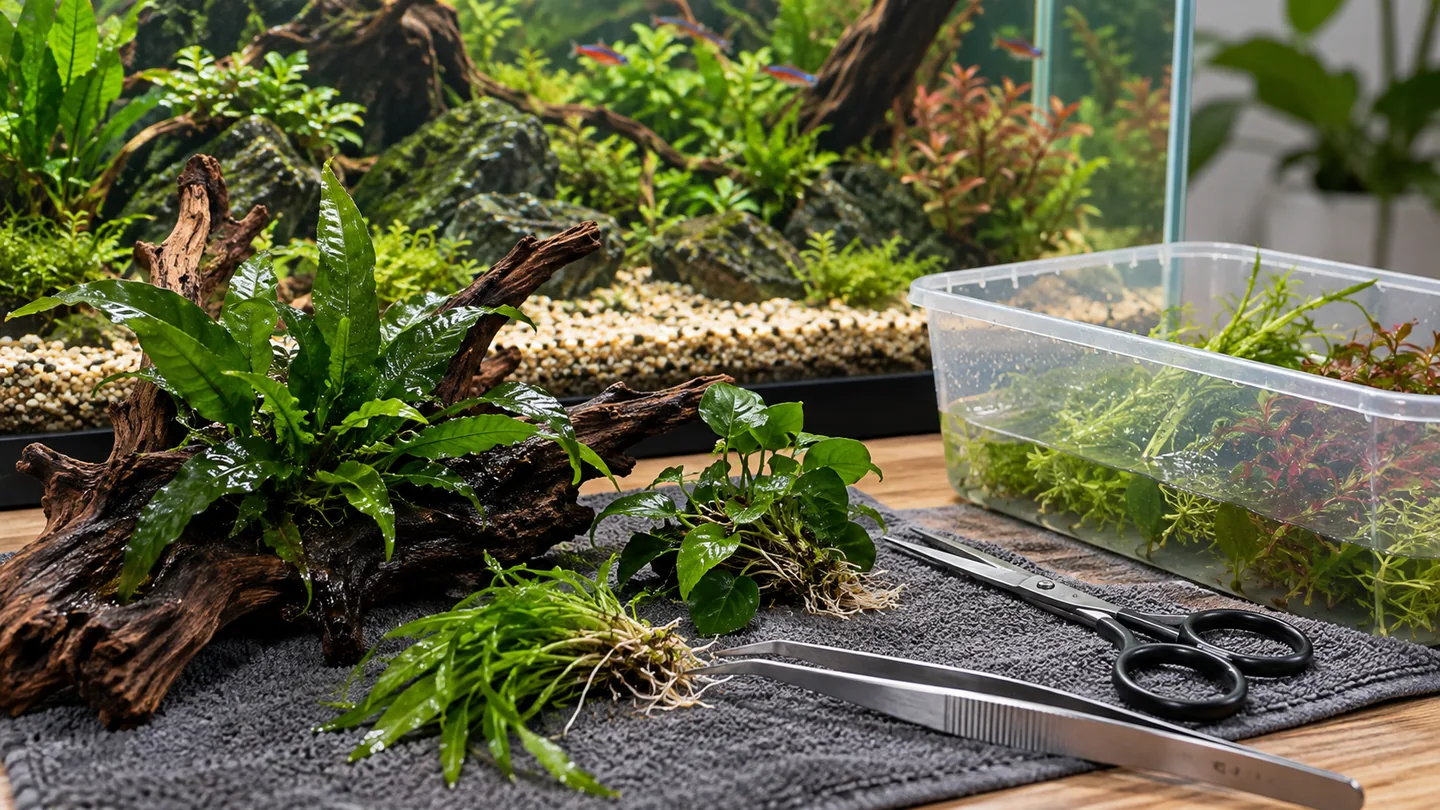
Keep the rhizome above the substrate
Roots can extend into gravel or sand, but the thick horizontal rhizome should not be buried. Wedge the plant into hardscape or attach it with thread or aquarium-safe gel glue.
Use modest lighting
Low to moderate light is usually sufficient. Positioning Anubias under taller plants or hardscape can reduce algae pressure on older leaves.
Feed the water column
Anubias takes much of its nutrition from the water rather than depending on a rich substrate. A balanced liquid fertiliser may help in lightly stocked planted tanks.
Remove badly algae-covered leaves selectively
Do not strip the plant bare. Correct the light and nutrient imbalance first, then remove only leaves that are severely damaged or shaded beyond usefulness.
Propagate by dividing the rhizome
Cut a healthy established rhizome into sections, each with roots and several leaves, then attach the new sections separately.
Related aquarium tools and guides
Frequently asked questions
Can Anubias be planted in sand?
The roots can be in sand, but the rhizome must stay above it.
Does Anubias need CO2?
No. It grows without injected CO2.
Why does Anubias get algae easily?
Its leaves live a long time and grow slowly, so excess light gives algae plenty of time to colonise them.
Sources and further reading
This guide separates general aquarium arithmetic from fish-welfare decisions. For species-specific limits, always check the needs of the fish you intend to keep.