A 40 gallon breeder is particularly flexible because its wide, relatively shallow shape provides strong horizontal swimming and bottom area. It can suit a larger community school, a substantial Corydoras group, selected dwarf cichlid territories or a species-focused setup, depending on compatibility. The footprint is excellent, but it does not remove the need to plan adult size, aggression and waste output.
The 40 breeder is popular for a reason: much of its water volume is translated into usable horizontal space. That creates options, but good stocking still comes from structure rather than maximum counts.
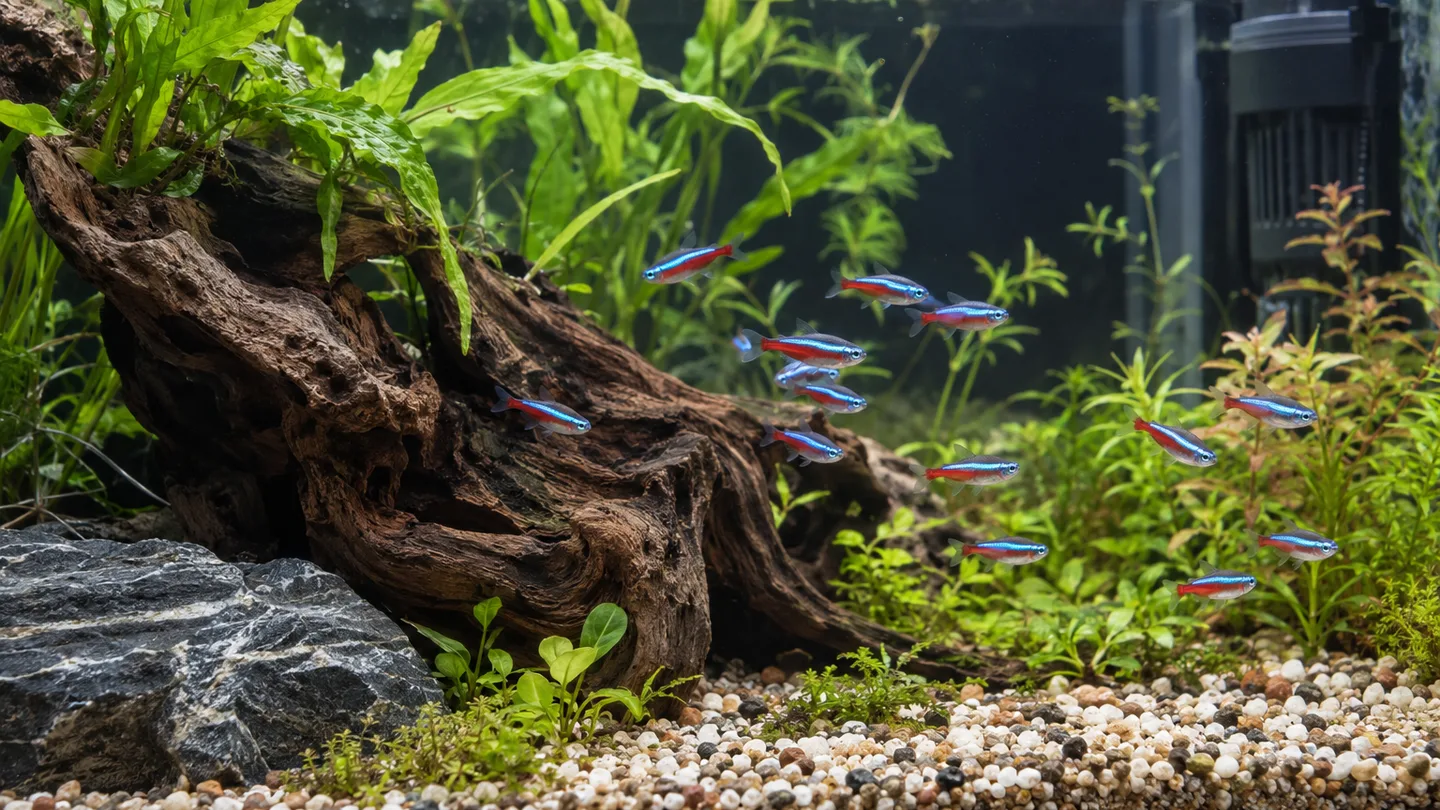
Why the footprint works
A broad base gives bottom fish more territory, allows hardscape to create visual barriers and provides longer horizontal paths for active species.
Community direction
One large shoal, a compatible bottom group and a peaceful focal species can produce a full-looking aquarium without overcrowding.
Territorial direction
The width can help when keeping species that establish territories because décor can break lines of sight. That does not make incompatible species safe; research the exact fish.
Avoid filling every layer to capacity
A tank can be overstocked even when fish occupy different levels. All livestock still contributes to oxygen demand and waste.
Related aquarium tools and guides
Frequently asked questions
Is a 40 breeder better than a tall 40 gallon?
For many active and bottom-dwelling fish, the breeder footprint is more useful because it offers more horizontal and floor space.
Can a 40 breeder hold a large school?
Yes for appropriately sized schooling species, provided filtration, adult size and compatibility are suitable.
Can I keep dwarf cichlids in a 40 breeder?
Potentially. The footprint allows territories, but species-specific aggression, pairing and water needs must be researched.
Sources and further reading
This guide separates general aquarium arithmetic from fish-welfare decisions. For species-specific limits, always check the needs of the fish you intend to keep.