Aquarium planning

Target-volume tank dimensions calculator

Solve one missing rectangular dimension from a target volume and two known measurements.

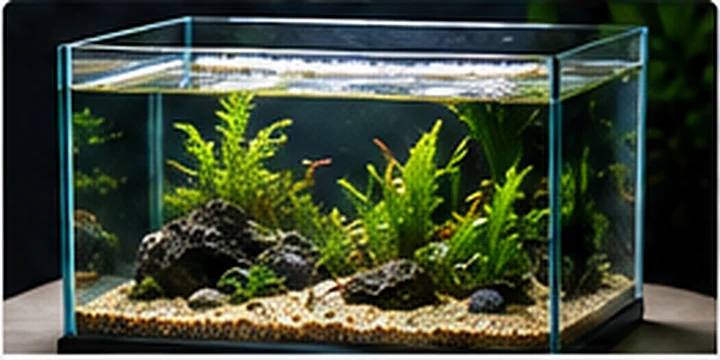
Photorealistic image of a planted freshwater aquarium used for tank-volume planning

Work backwards from volume

Missing dimension

Rectangular geometry can solve one missing internal dimension when you know the target litres and the other two dimensions. It is useful for concept planning and checking whether a stated capacity is geometrically plausible.

Example

A target of 180 litres equals 180,000 cm³. With a 100 × 40 cm base, the missing water height is 45 cm.

missing cm = target litres × 1,000 ÷ known dimension A ÷ known dimension B
Photorealistic image of a planted freshwater aquarium used for tank-volume planning

Reverse geometry solves a size; it does not prove the resulting shape is suitable for a particular animal.

Design boundary

Swimming length, footprint, surface area, weight, glass design and species behaviour remain separate considerations. Treat this as geometry, not an aquarium-design approval.

Use reverse volume maths for planning, not species approval

If you know a target rectangular volume and two dimensions, the missing third dimension follows from simple geometry. This is useful when comparing cabinet footprints, sketching a custom sump or asking what height would be needed for a particular footprint.

The result says nothing about whether those proportions suit a particular animal. A tall narrow tank and a long shallow tank can have the same litres while offering very different swimming length, surface area and usable footprint. Research species needs separately.
Sense-check the answer

  • Keep all dimensions in the same unit.
  • Use internal water dimensions when estimating capacity.
  • Remember that substrate and the waterline reduce the actual water present.
  • Check manufacturer or fabricator specifications before treating a theoretical dimension as a build specification.