Fish added to a new tank can die because the biological filter is not ready, ammonia or nitrite rises, transport and handling have already weakened them, or the new water differs sharply in temperature, pH or hardness. Disease introduced with new livestock is another possibility. Start with water tests and the tank's cycling history before assuming acclimation alone caused the loss.
A fish can arrive looking normal but still be stressed from capture, shipping, shop holding and transport. Adding an immature aquarium or sudden chemistry change on top of that can push a vulnerable fish past its limit.
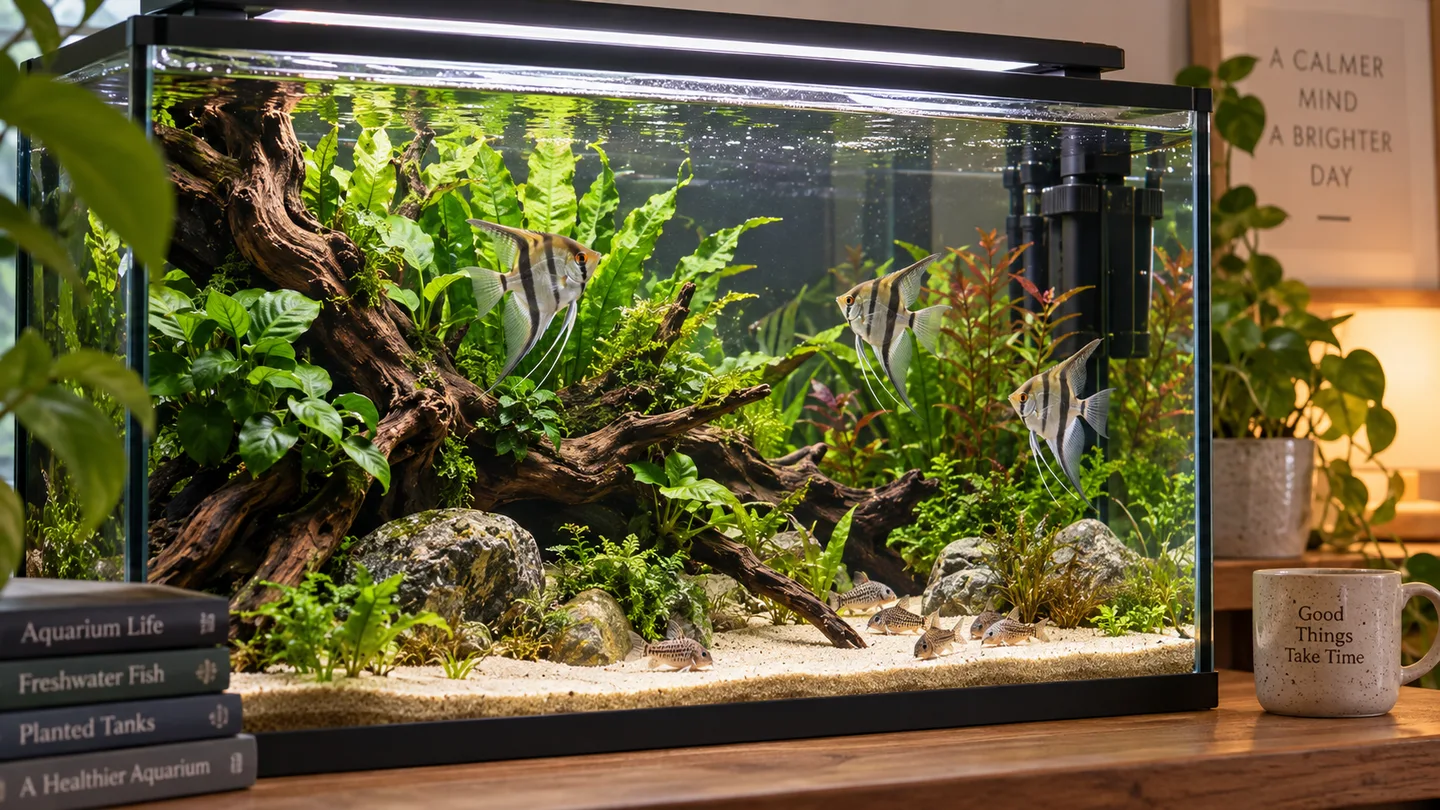
Was the aquarium actually cycled?
A tank is not cycled simply because the filter has been running for a few days. The biological filter needs enough established bacteria to process ammonia and nitrite back to zero.
RSPCA strongly advises fishless cycling before adding livestock.
Test the water immediately
- Ammonia should be zero.
- Nitrite should be zero.
- Check temperature against the species requirement.
- Compare pH and hardness if source waters differ substantially.
Consider accumulated transport stress
Fish may have experienced several transfers before reaching your aquarium. RSPCA notes that transport can cause oxygen starvation and shock if poorly managed.
A weak fish may deteriorate after arrival even when the aquarium itself is reasonably maintained.
Acclimation should reduce sudden change
Temperature matching and a controlled introduction help avoid abrupt environmental change. Acclimation cannot compensate for toxic water, an unsuitable tank or seriously unhealthy fish.
Quarantine protects both sides
A quarantine tank lets you observe new fish before exposing the main aquarium and provides a controlled place for treatment if signs of disease appear.
If deaths continue after adding a batch of fish, inspect all survivors and seek specialist advice before buying replacements.
Related aquarium tools and guides
Frequently asked questions
Can fish die from an uncycled tank?
Yes. Ammonia and nitrite can rise rapidly before a biological filter is established.
How long should I acclimate new fish?
There is no single universal time. Follow a method appropriate to the species and the difference between source and destination water.
Should I add replacement fish straight away?
No. Identify and correct the cause first, otherwise the next fish may face the same problem.
Sources and further reading
This guide separates general aquarium arithmetic from fish-welfare decisions. For species-specific limits, always check the needs of the fish you intend to keep.