Avoid routine aquarium salt when you have salt-sensitive fish, delicate plants or invertebrates, when the disease does not benefit from sodium chloride, or when another medication protocol specifically warns against combining treatments. Salt can accumulate because it does not evaporate, so repeated blind dosing is also unsafe. A hospital tank is often better when only one fish needs a salt-based treatment.
The phrase 'a little salt won't hurt' is not a safe dosing principle. Freshwater species differ substantially in tolerance, and a planted community aquarium is very different from a short-term treatment bath.
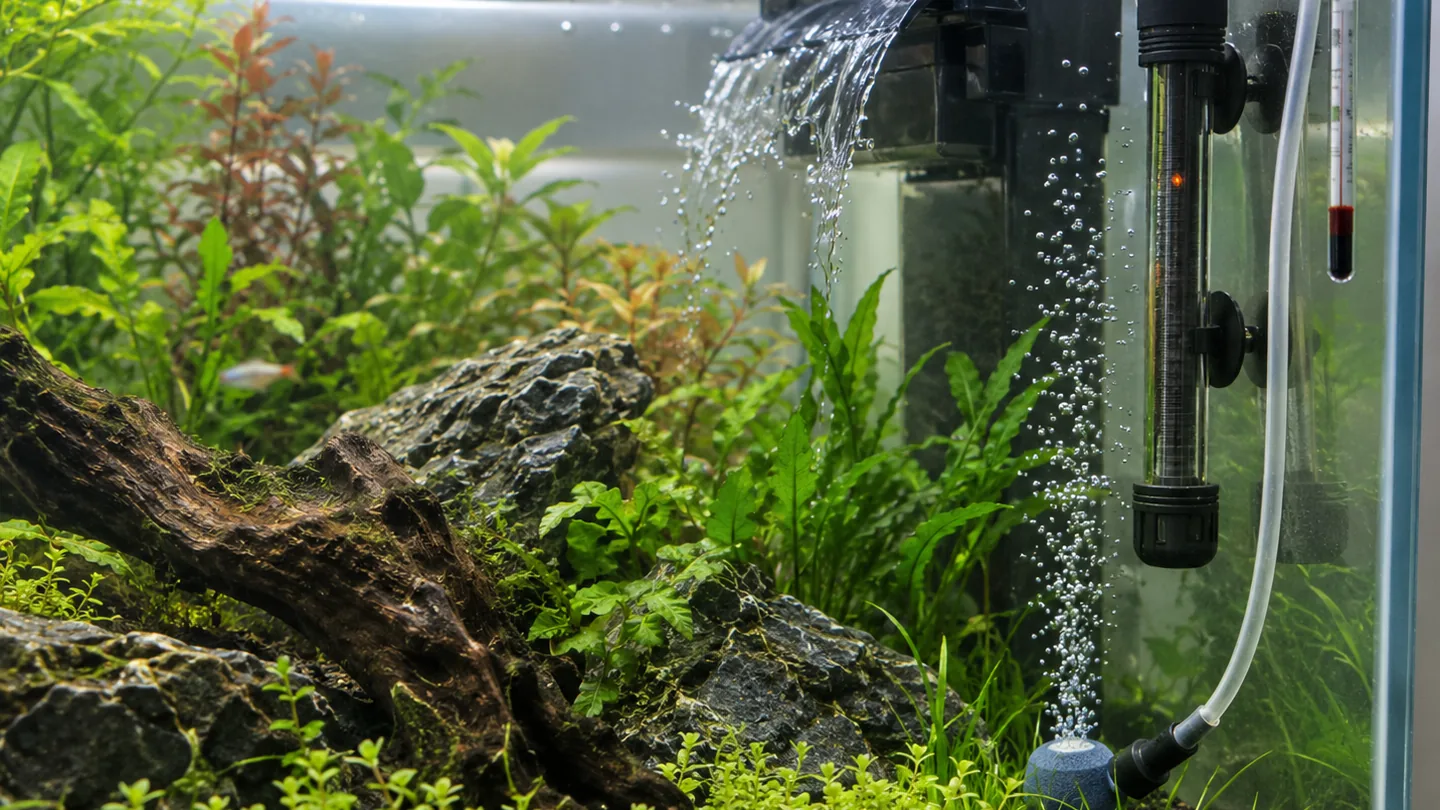
Avoid salt when the inhabitants are not known to tolerate it
Some freshwater fish, plants and invertebrates are more sensitive to increased salinity than others. If reliable species-specific guidance is unavailable, do not assume tolerance.
Mixed tanks are especially difficult because one inhabitant may be harmed before another reaches a useful treatment concentration.
Do not use salt without a treatment target
Salt does not fix every case of fin damage, fungus, bloating or bacterial disease. Adding it 'just in case' can complicate water chemistry without addressing the cause.
Define the problem first.
Be careful with medication combinations
Some product labels or veterinary protocols specify whether salt can be used concurrently. Follow those instructions rather than combining treatments from unrelated online recipes.
When in doubt, use one evidence-based protocol at a time.
Watch cumulative dosing
Salt remains behind when water evaporates. Only water changes remove it from the aquarium.
Track exactly how much water has been replaced and only restore the amount of salt removed when the protocol calls for it.
Use a hospital tank when appropriate
If one fish may benefit from salt but the display contains sensitive plants or invertebrates, an appropriately sized hospital tank can isolate the treatment from the rest of the ecosystem.
Frequently asked questions
Can salt hurt aquarium plants?
Yes. Tolerance varies widely, and some plants are damaged by salinity used in fish-treatment protocols.
Can salt hurt shrimp or snails?
Some invertebrates are salt-sensitive, so do not assume a concentration safe for fish is safe for them.
Should I add more salt after topping up evaporation?
No. Evaporation removes water, not salt, so topping up alone does not justify redosing.
Sources and further reading
This guide separates general aquarium arithmetic from fish-welfare decisions. For species-specific limits, always check the needs of the fish you intend to keep.