If ammonia becomes detectable after adding fish, make an appropriate conditioned partial water change, retest, reduce unnecessary feeding and check that the filter is running normally. Do not add more fish. Look for a sudden bioload increase, dead livestock, blocked flow, recently replaced media or untreated tap-water exposure. Keep testing daily until ammonia and nitrite remain at zero.
A cycled tank can still show ammonia after stocking if the new waste load is larger than the filter population was prepared for. That does not mean the entire cycle vanished. It does mean the fish need immediate water-quality protection while you identify the cause.
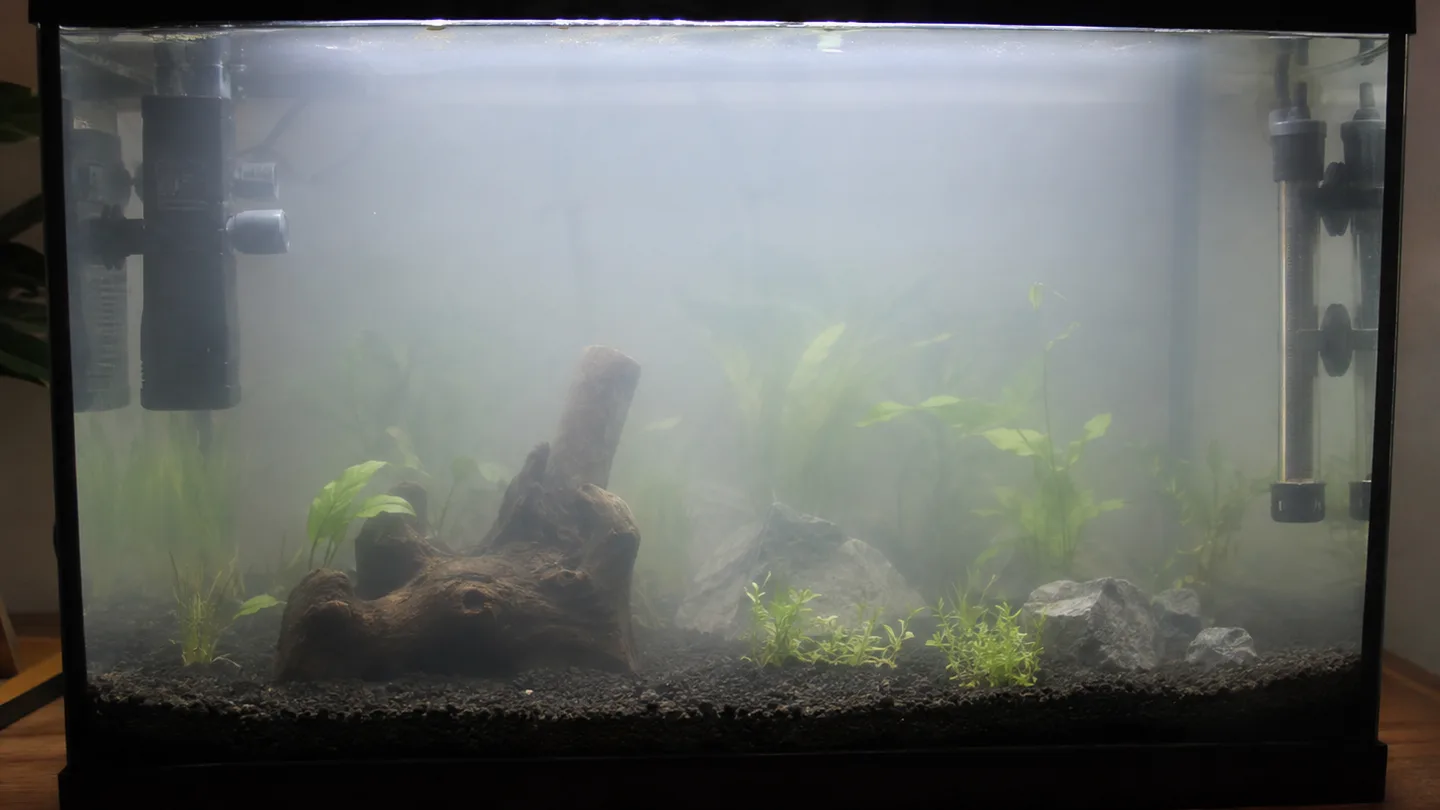
First response: dilute the ammonia
Use conditioned replacement water at a sensible matching temperature. The size and frequency of water changes should be guided by the reading, livestock condition and source-water chemistry.
Repeated partial changes may be needed if ammonia returns before the filter catches up.
Check the obvious causes
- Too many fish added at once.
- A large increase in feeding.
- Dead fish, snails or plant material decomposing unseen.
- Filter stopped or flow is badly reduced.
- Mature media was replaced or cleaned aggressively.
- Untreated chlorine or chloramine reached the filter.
Keep oxygen and flow high
Nitrifying organisms need oxygenated water, and stressed fish also benefit from good gas exchange. Restore normal filter flow and consider extra aeration if circulation is poor.
Do not turn off the filter to let the tank settle.
Avoid adding more bioload
Pause further stocking and feed only what the existing fish need. More fish or excess food adds nitrogen faster than the recovering filter can process it.
Once ammonia and nitrite are stable at zero, allow the tank time to prove stability before the next addition.
Track nitrite after the ammonia falls
An ammonia spike can be followed by a nitrite spike as the first bacterial stage catches up faster than the second.
Continue testing both compounds rather than stopping as soon as ammonia reaches zero.
Related aquarium tools and guides
Frequently asked questions
Will a water change remove the beneficial bacteria?
No. Most beneficial bacteria live on filter media and other surfaces, so water changes are appropriate for protecting fish from ammonia.
Should I stop feeding during an ammonia spike?
Reduce feeding to avoid unnecessary waste, but do not starve fish for prolonged periods.
Can adding too many fish cause an ammonia spike?
Yes. A sudden increase in bioload can exceed the established bacterial capacity.
Sources and further reading
This guide separates general aquarium arithmetic from fish-welfare decisions. For species-specific limits, always check the needs of the fish you intend to keep.