Internal filters sit inside the aquarium, making them easy to install and eliminating external hoses. External filters, usually canisters or HOBs, move equipment outside the tank and often provide more media volume. Internal filters are convenient for smaller setups; external systems suit larger displays where media capacity and cleaner aesthetics matter.
Placement affects more than appearance. It changes maintenance access, usable tank space, flow pattern and the consequences of a leak.
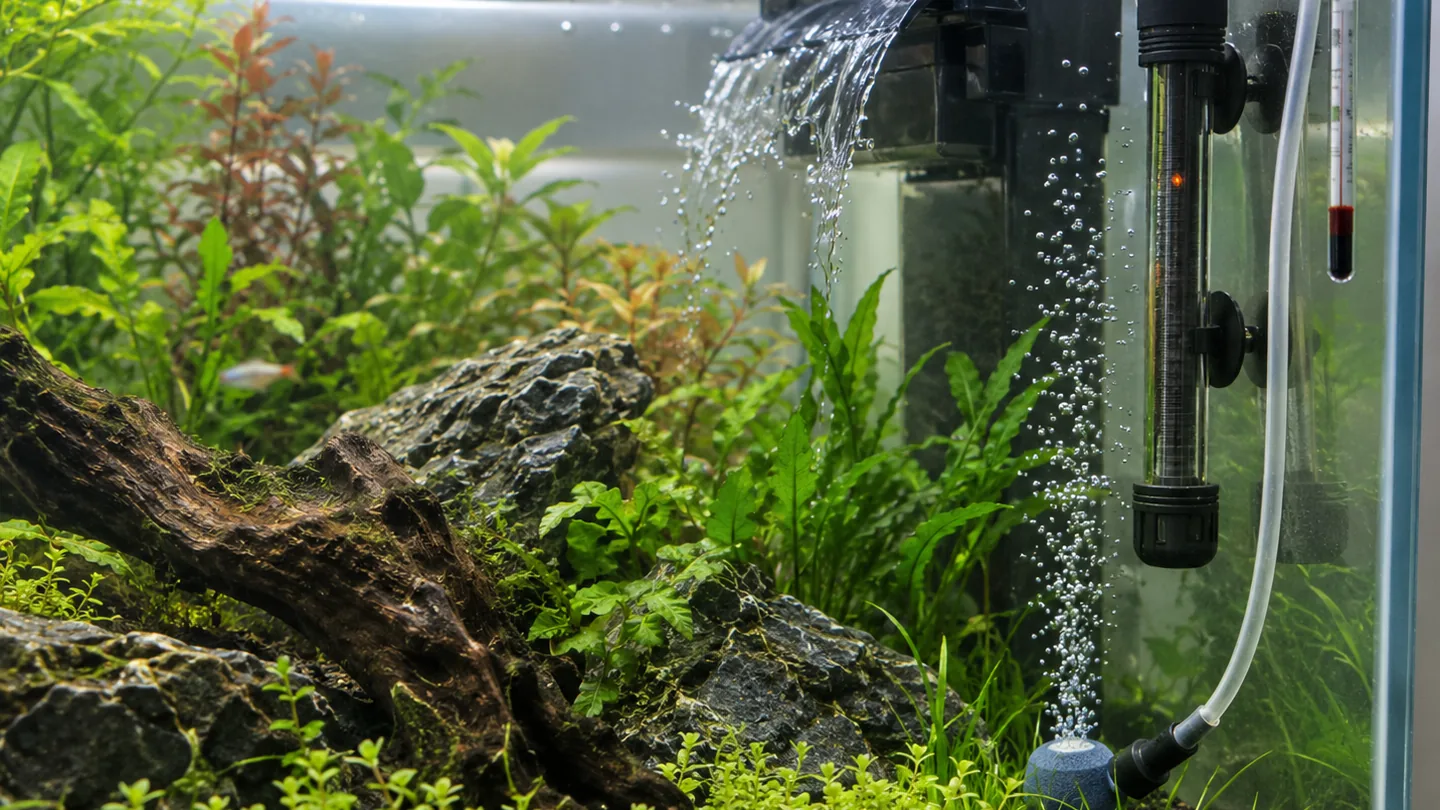
Internal filter strengths
- Simple installation.
- No long external hoses.
- Leaks stay inside the aquarium.
- Good for small and medium tanks where a compact unit is sufficient.
External filter strengths
- More room for media in many models.
- Less equipment inside the display.
- Flexible intake and return placement with canisters.
- Better scaling for larger tanks.
Space trade-offs
Internal filters occupy aquarium volume and may be visually obvious. External canisters need cabinet or floor space and hose clearance behind the tank.
Measure both the aquarium and furniture before choosing.
Maintenance access
An internal filter can often be lifted out quickly but may release trapped debris if handled carelessly. External filters keep dirty servicing away from the fish but can take longer to disconnect and clean.
Safety and reliability
Internal units avoid external water lines. Canisters depend on sound hoses, clips and seals, so periodic inspection matters.
Use drip loops and follow electrical safety guidance with every filter type.
Related aquarium tools and guides
Frequently asked questions
Are external filters always stronger?
No, but they often offer more media volume and flexible flow on larger models.
Do internal filters oxygenate water?
They can if the outlet moves the surface effectively.
Which is easier to hide?
External canisters usually leave only the intake and return visible inside the aquarium.
Sources and further reading
This guide separates general aquarium arithmetic from fish-welfare decisions. For species-specific limits, always check the needs of the fish you intend to keep.