A budget quarantine setup can use a clean clear plastic storage tub or spare glass tank, a mature sponge filter, air pump, heater if the fish is tropical, thermometer, lid, water conditioner and a couple of smooth hides. Keep the bottom bare, use dedicated maintenance tools and calculate the actual water volume so water changes and medication doses are accurate.
The display aquarium is where you spend money on appearance. Quarantine only needs to be safe, stable, easy to clean and easy to observe. That makes a clear storage tub one of the most useful low-cost pieces of fishkeeping equipment you can keep on a shelf.
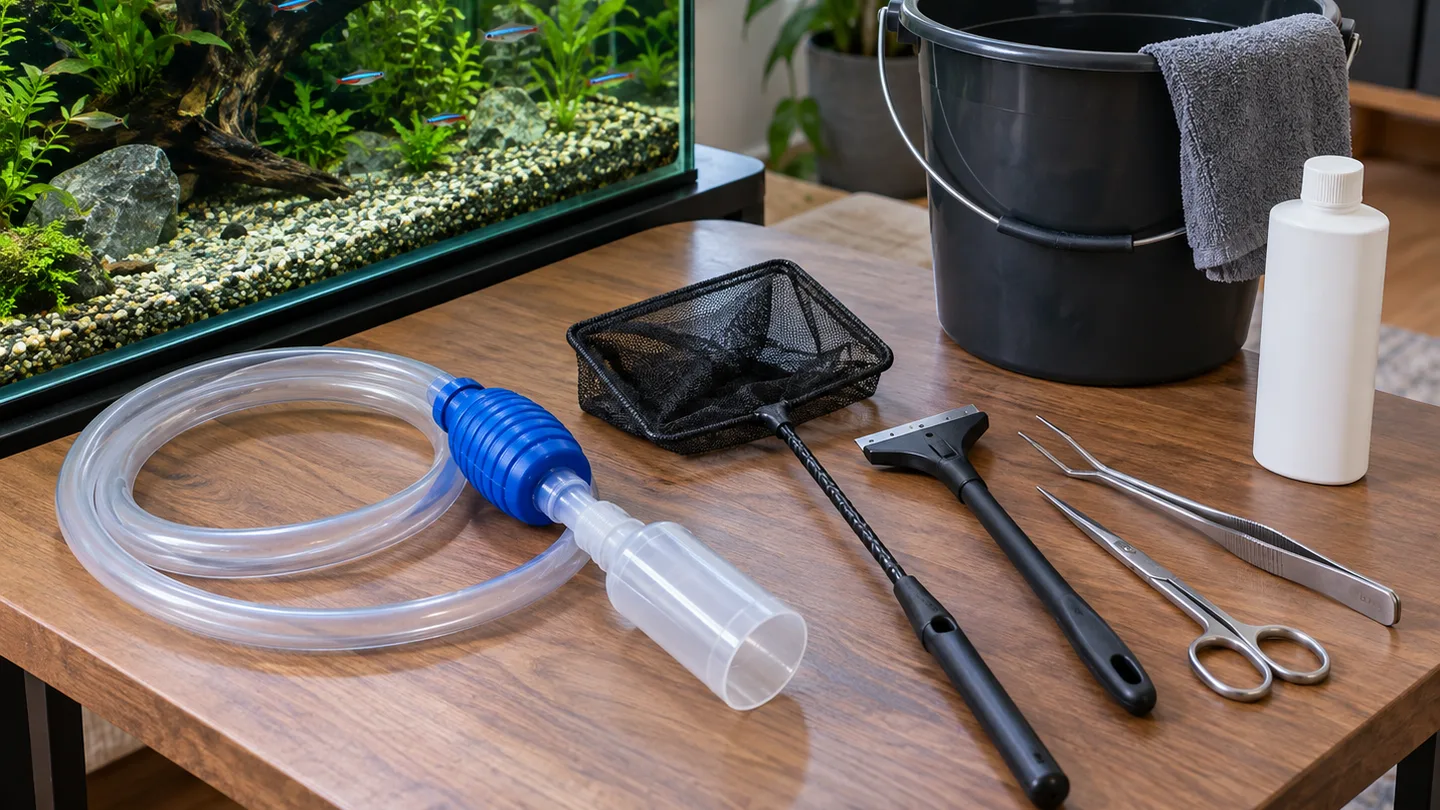
Budget shopping list
| Item | Budget option | Do not compromise on |
|---|---|---|
| Container | Clear food-safe storage tub | No chemical contamination, secure sides |
| Filter | Air-driven sponge filter | Established media where possible |
| Air supply | Small air pump and airline | Reliable continuous operation |
| Heat | Basic thermostatic heater | Correct wattage and safe immersion |
| Temperature check | Simple digital thermometer | Independent reading |
| Hides | PVC fittings or washable ornaments | Smooth, non-toxic surfaces |
| Lid | Tub lid modified for cables/airline | Ventilation plus jump prevention |
Seed the sponge filter before you need it
The cheapest quarantine filter is also one of the easiest to keep ready. Run a spare sponge filter in an established healthy aquarium so it carries biological bacteria. When quarantine is needed, move that sponge to the temporary tank.
If you do not have mature media, the quarantine tank must be treated as an uncycled system with correspondingly close ammonia monitoring and water changes.
Why bare bottom saves money and improves control
Substrate is unnecessary for most temporary quarantine setups. A bare base makes uneaten food and waste visible, simplifies siphoning and avoids absorbing some medications.
Give fish shelter with cheap, smooth, inert objects rather than building a full aquascape.
Use dedicated tools
- One inexpensive net labelled for quarantine.
- A short siphon or turkey baster used only in quarantine.
- A small bucket or measuring jug kept separate.
- A marked dosing syringe or measuring spoon where medicines are used.
Know the real water volume
Storage tubs are often labelled with a maximum nominal capacity that is larger than the actual filled quarantine volume. Measure the water you add or calculate the working volume from internal dimensions and water height.
Accurate volume matters for water-change percentages and any treatment dose based on litres or gallons.
Pack it away ready for next time
After quarantine, clean and dry the empty container and dedicated tools according to the disease situation and treatment instructions. Keep the filter strategy separate: if you want a mature spare sponge available, reseed or replace it only when you are confident it is safe to return to an established system.
Store the tub with the heater, airline, net and thermometer inside so the next quarantine can be assembled quickly.
Related aquarium tools and guides
Frequently asked questions
How small can a quarantine tank be?
It must still provide adequate temporary swimming space, oxygenation, temperature stability and water quality for the fish being held. Smaller volume can reduce medication cost but becomes chemically less stable.
Can I use a bucket as a quarantine tank?
A bucket is generally too small and difficult to observe for anything beyond very short handling. A clear storage tub or spare aquarium is usually far more practical.
Do I need substrate in a quarantine tank?
Usually no. Bare bottom is easier to inspect and clean. Provide appropriate hides instead.
Sources and further reading
This guide separates general aquarium arithmetic from fish-welfare decisions. For species-specific limits, always check the needs of the fish you intend to keep.