Before moving a cycled aquarium, prepare containers for livestock and mature filter media. Drain most water, keep biological media submerged or very wet in aquarium water, keep substrate damp if it is being reused and minimise the time the filter is without oxygenated flow. At the new location, level the tank, refill with conditioned temperature-matched water, restart filtration and test ammonia and nitrite for several days.
You do not need to preserve all the old aquarium water to preserve the cycle. Most useful nitrifying bacteria live on the filter media, substrate and other surfaces. That makes moving easier, but only if those surfaces are protected from drying and long stagnant periods.
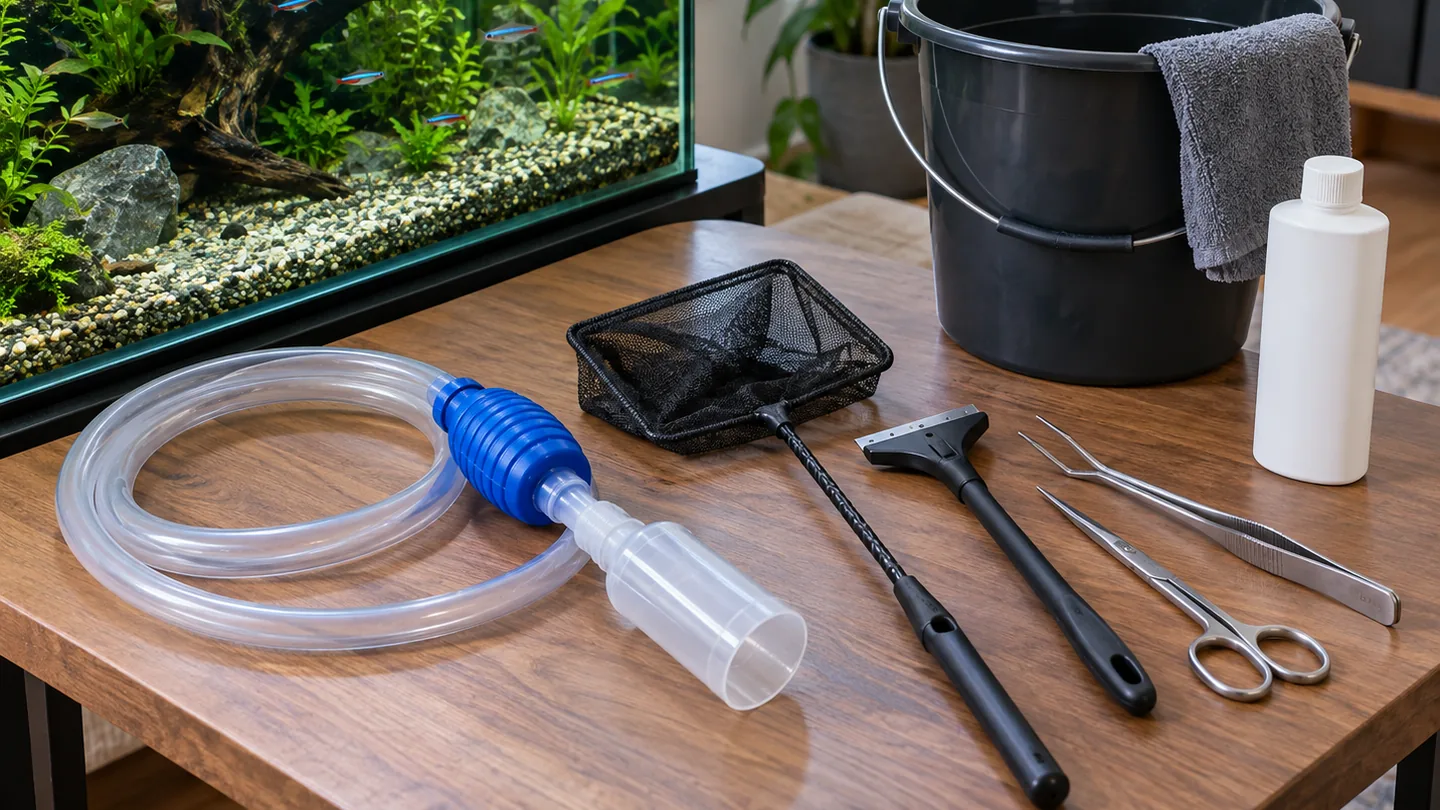
Prepare before draining
- Have fish-safe transport containers ready.
- Prepare insulated storage for mature filter media.
- Label hoses, filter parts and electrical cables.
- Have enough water conditioner for the refill.
- Check the new stand and location before the tank arrives.
Protect the biological filter
Remove mature media last and keep it wet in aquarium water during transport. For longer moves, oxygenation becomes increasingly important.
Do not rinse the media under untreated tap water while dismantling the tank.
What to do with substrate
For a short move, keeping established substrate damp can preserve biofilm. Very deep dirty beds may release accumulated waste when disturbed, so avoid pouring heavily fouled transport water straight back into the display.
If substrate is replaced entirely, rely more heavily on preserved mature filter media and test closely afterward.
Restart in the correct order
- Level and support the empty aquarium.
- Add substrate and hardscape.
- Refill with conditioned water at a safe temperature.
- Install and restart the mature filter promptly.
- Reintroduce livestock using a suitable acclimation approach.
- Test ammonia and nitrite over the following days.
Do not overfeed immediately after the move
Fish are already stressed and the biological filter may have lost some capacity. Feed lightly for the first day or two and watch water quality.
A small temporary ammonia or nitrite reading is a reason for water changes and monitoring, not panic replacement of all media.
Related aquarium tools and guides
Frequently asked questions
Do I need to keep all the old aquarium water?
No. Old water contains far fewer nitrifying organisms than mature filter media and surfaces. Keep enough for safe transport if useful, but prioritise the media.
How long can a cycled filter be off during a move?
There is no exact safe limit. Keep media wet, minimise downtime and restore oxygenated flow as soon as practical.
Should I clean the filter before moving?
Avoid a deep clean immediately before a move unless flow is badly restricted. Preserve as much mature biological media as possible.
Sources and further reading
This guide separates general aquarium arithmetic from fish-welfare decisions. For species-specific limits, always check the needs of the fish you intend to keep.