Do not begin by emptying the aquarium. First test ammonia and nitrite, because a green bloom can appear alongside an unstable cycle. Remove direct sunlight, shorten an excessive photoperiod, feed sensibly and clean accumulated organic waste. If the water remains pea-green, a UV steriliser can clear suspended algae efficiently. Once visibility improves, continue normal partial water changes and correct the conditions that caused the bloom.
The fastest-looking fix is not always the best fix. Green water can return after a dramatic water change because the bloom's cause—usually light plus available nutrients—has not changed.
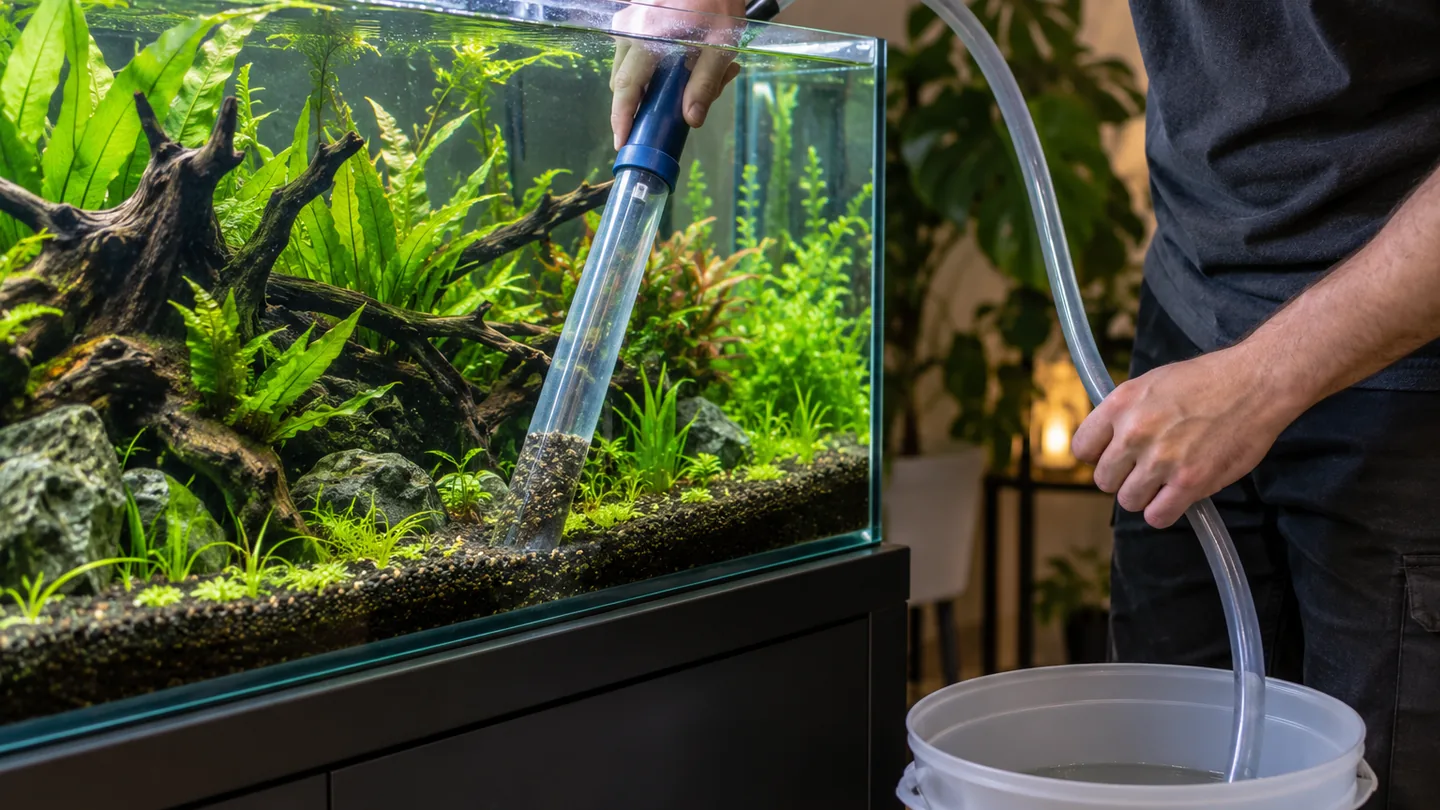
Step 1: check the water chemistry
Measure ammonia and nitrite before concentrating on appearance. If either is above zero in a stocked tank, address that first because fish welfare matters more than water clarity.
Check nitrate as useful context and compare with your normal baseline.
Step 2: remove unnecessary light
- Keep the aquarium out of direct sunlight where possible.
- Use a timer so the photoperiod is consistent.
- Shorten an obviously excessive lighting period rather than making random daily changes.
- Do not increase light intensity while the bloom is active.
Step 3: reduce nutrient input
Feed only what the fish consume promptly, remove decaying organic material and avoid accidental double-dosing of fertilisers. Vacuum obvious detritus during a normal water change.
The goal is not to strip the tank sterile but to stop feeding explosive algae growth.
Step 4: choose a targeted clearing method
For persistent suspended green water, UV sterilisation is highly effective because the unit treats organisms that pass through the water column. Size and flow rate should follow the manufacturer's instructions.
A blackout is another option used by hobbyists, but it can be hard on live plants and dying algae can add waste, so monitor the tank carefully.
Step 5: prevent the rebound
Once clear, return to a stable lighting schedule, normal water changes and measured feeding. Keep testing for several weeks so a hidden ammonia or nitrate problem does not continue after the colour disappears.
Related aquarium tools and guides
Frequently asked questions
How long does UV take to clear green water?
Many aquariums improve within a few days, but actual time depends on the UV unit, flow, bloom density and tank volume.
Should I replace all the water?
No. A full reset is rarely necessary and can create new instability. Use measured partial changes unless an emergency requires more.
Will filter floss clear green water?
Usually not by itself because the free-floating algae cells are extremely small.
Sources and further reading
This guide separates general aquarium arithmetic from fish-welfare decisions. For species-specific limits, always check the needs of the fish you intend to keep.