Gravel, sand and aquasoil all develop microbial biofilm, including nitrifying organisms, especially on oxygenated upper surfaces. Coarse porous substrate can offer substantial surface area. Deeper compacted zones may receive much less oxygen, so they do not function like high-flow filter media. In most conventional aquariums, substrate contributes to biological stability alongside the filter rather than replacing it.
Beneficial bacteria are not confined to the filter. Once an aquarium matures, the entire wet interior becomes biologically active. That is why replacing substrate can affect stability—but also why a mature filter can often protect the cycle when substrate is disturbed carefully.
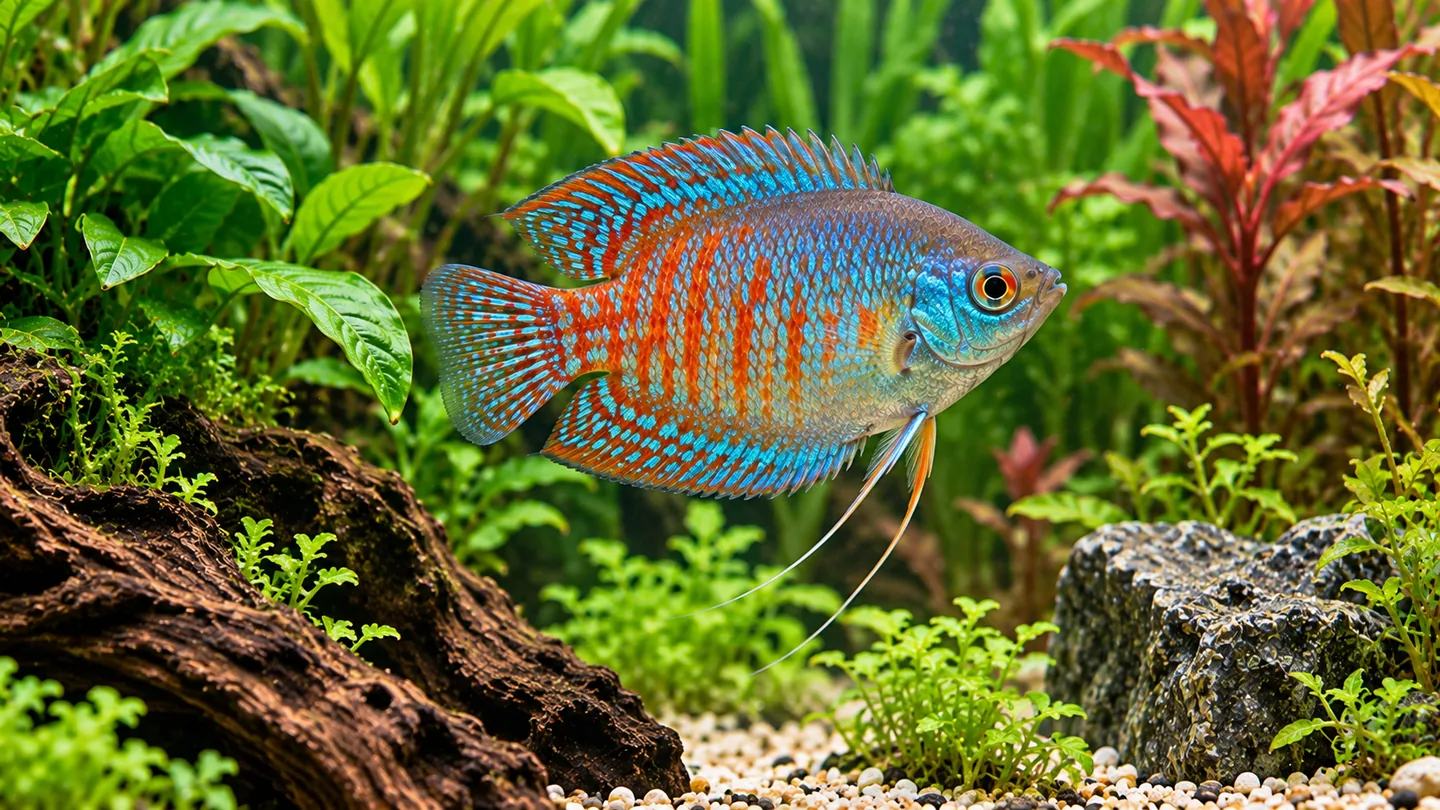
Where bacteria grow in the substrate
Biofilm coats individual grains, particularly near the surface where oxygenated water and dissolved waste are available.
Coarser media allows more water exchange between grains than tightly compacted fine material.
Why the filter remains important
A filter forces oxygenated water through high-surface-area media continuously. Substrate receives more variable flow and can contain stagnant pockets.
That makes filter media easier to rely on and preserve during major maintenance.
Can changing substrate crash the cycle?
Removing all mature substrate removes some microbial surface area, but the effect depends on how much biological capacity also exists in the filter and elsewhere.
Keep mature filter media running, avoid replacing everything at once where possible, and test after a major substrate change.
Do not over-clean the entire bed
Routine maintenance should remove accumulated waste without sterilising the whole aquarium. Deep-cleaning every surface at once reduces biological resilience.
Work in sections if a mature tank needs unusually heavy substrate cleaning.
Related aquarium tools and guides
Frequently asked questions
Is beneficial bacteria in sand?
Yes, especially on oxygenated upper grains and surfaces exposed to water movement.
Can substrate cycle a tank without a filter?
It can contribute strongly, but a conventional filter provides more predictable oxygenated biological capacity.
Will replacing gravel remove all beneficial bacteria?
No. Bacteria also live in the filter and on other surfaces, but a total substrate replacement can still reduce biological capacity.
Sources and further reading
This guide separates general aquarium arithmetic from fish-welfare decisions. For species-specific limits, always check the needs of the fish you intend to keep.