New substrate can be added to an established aquarium, but the safest method depends on the material. Inert sand or gravel can usually be rinsed and added carefully in sections. Active soils may release dust, nutrients or ammonia and can alter pH and hardness, so manufacturer instructions matter. Clean excessive detritus first, keep the filter running and monitor water chemistry after a major change.
The risk is not that mature tanks can never accept new substrate. It is that a large substrate change can release trapped waste, cloud the water or alter chemistry quickly.
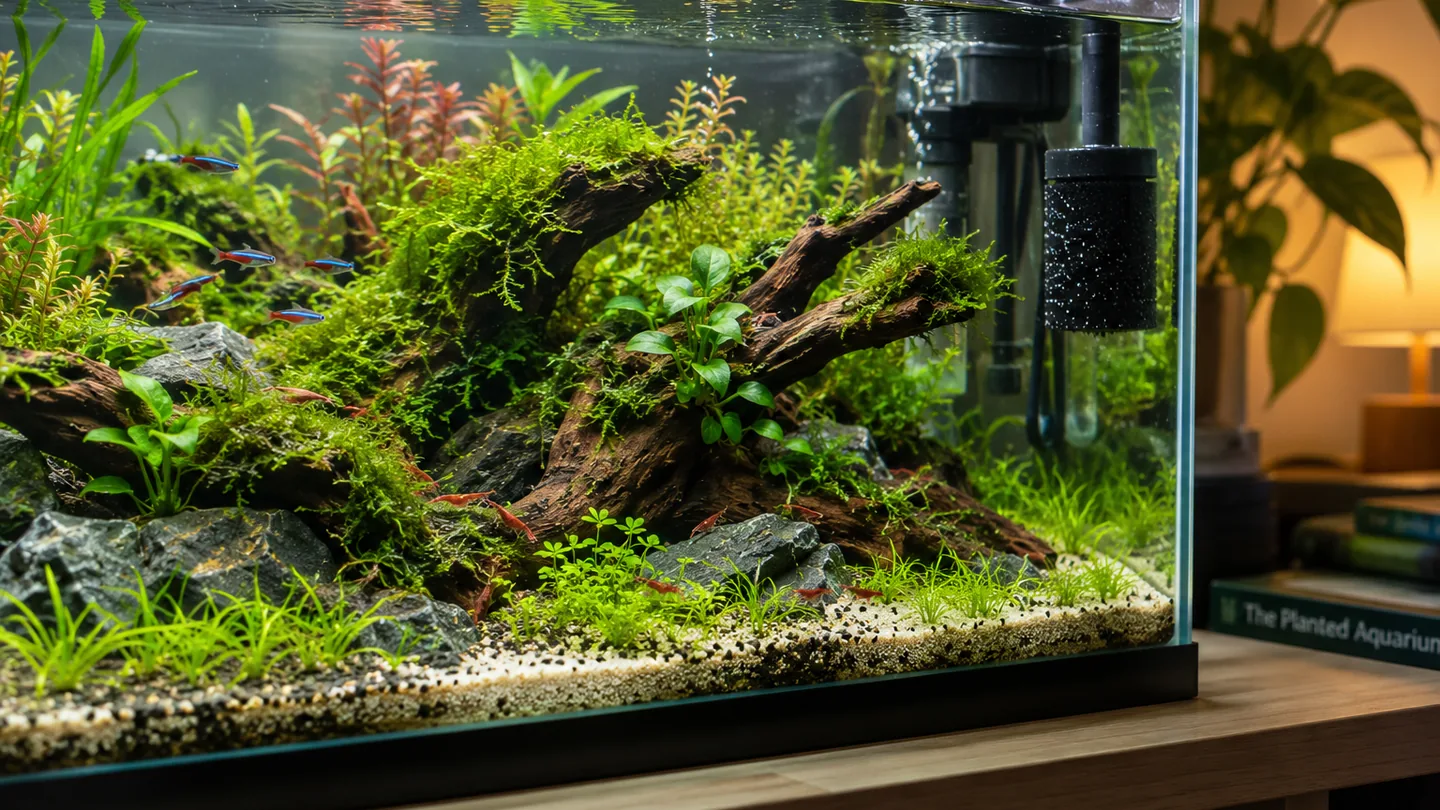
Prepare the new material correctly
Rinse inert gravel or sand unless the manufacturer says otherwise. Active aquasoils and specialist substrates may have different preparation rules and should not be treated like ordinary gravel.
Do not use soap or household cleaners.
Clean before you bury
If the existing bed contains visible detritus, siphon the worst areas before adding material. Burying a thick layer of decomposing waste can create poor conditions under the new substrate.
Work in sections rather than stirring the whole tank at once.
Add substrate slowly
- Lower rinsed material in a clean cup or container.
- Pour close to the bottom rather than from the surface.
- Keep fish away from the working area where possible.
- Pause if the water becomes heavily clouded.
Active substrate needs extra caution
Some active soils buffer pH and hardness and may release nutrients when new. Fluval notes that soil behaviour depends on source-water buffering, so a large addition can change chemistry more than inert gravel would.
Test pH, GH, KH, ammonia and nitrite after significant additions.
The filter carries most of the safety margin
Beneficial bacteria live on many surfaces, but mature filter media is usually the most important concentrated biological habitat. Keep it wet, oxygenated and running throughout the change.
Related aquarium tools and guides
Frequently asked questions
Can I add sand on top of existing gravel?
Yes, but the layers will tend to mix over time unless separated, and fine sand can settle into gravel gaps.
Will new substrate crash the cycle?
Not normally if mature filter media is preserved, but a major disturbance can create temporary ammonia or nitrite problems.
Should fish be removed first?
For small additions, often no. For large disruptive substrate changes, temporarily moving fish can make the work safer and calmer.
Sources and further reading
This guide separates general aquarium arithmetic from fish-welfare decisions. For species-specific limits, always check the needs of the fish you intend to keep.