A betta may mistake colourful long-finned guppies for rivals, chase them or damage their fins. Guppies can also be active around food and may stress a slower betta. Water chemistry can be another mismatch because guppies generally favour harder, more mineral-rich water than bettas are usually associated with. If you try the combination, use a roomy planted tank and have a separation plan ready.
The fact that both fish are common community-shop species does not make them natural companions. The visual profile of a male guppy can trigger a territorial betta, while the two species do not always share ideal hardness preferences.
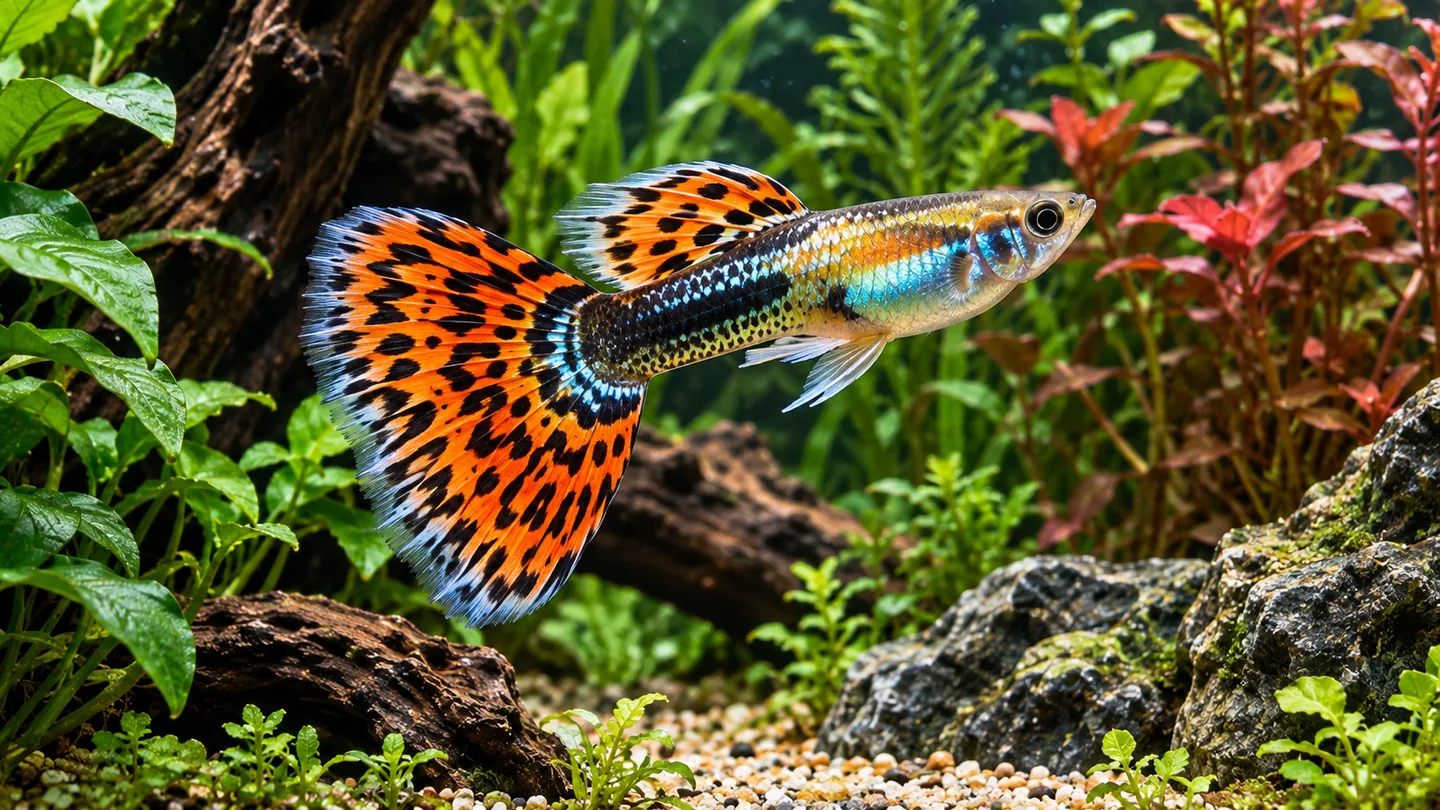
Why the pairing is risky
- Male guppies have bright colours and long fins that can attract aggression.
- Bettas vary widely in temperament.
- Guppies are fast and active at feeding time.
- Their preferred mineral levels may not overlap as neatly as temperature alone suggests.
If you attempt the pairing
Use more space than either species would need alone, break sight lines with plants and wood, and avoid adding a betta to a cramped established guppy group.
Watch behaviour from the first hour and over the following days.
Warning signs
- Flaring followed by repeated chasing.
- Frayed guppy or betta fins.
- One species hiding constantly.
- A fish missing meals because it avoids the feeding area.
Safer alternatives
If the goal is a peaceful guppy community, choose calm species that fit guppy water chemistry and do not resemble territorial rivals. If the goal is a betta display, peaceful bottom-dwellers may be easier companions.
Related aquarium tools and guides
Frequently asked questions
Will a female betta be safer with guppies?
Not guaranteed. Female bettas can also be territorial or aggressive.
Can short-finned guppies reduce the risk?
Possibly, but temperament and water chemistry still matter.
Should I keep them together if there is chasing?
Persistent chasing means the pairing is failing and separation is appropriate.
Sources and further reading
This guide separates general aquarium arithmetic from fish-welfare decisions. For species-specific limits, always check the needs of the fish you intend to keep.