Bettas and gouramis can sometimes coexist in large heavily planted aquariums, but the pairing is risky because both often occupy the upper and middle water and may react aggressively to similar body shapes or displays. Male bettas and male gouramis are particularly unpredictable together. Peaceful community fish that use different zones are usually safer choices than combining two territorial labyrinth species.
Compatibility problems are more likely when species compete for the same vertical zone and use similar social signals. Bettas and gouramis check both boxes.
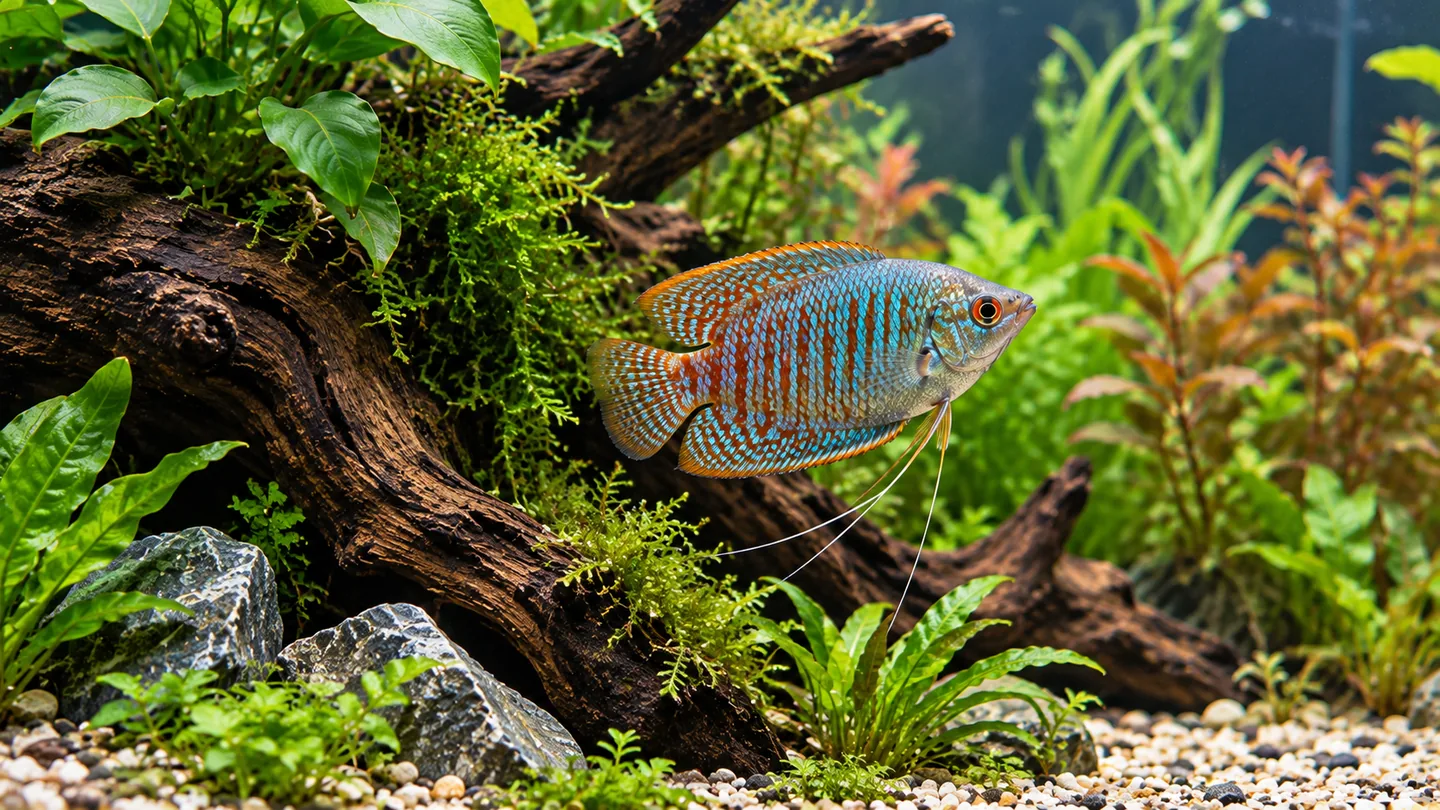
Why the combination can fail
- Both may defend upper-water territory.
- Both can flare or display toward rivals.
- Long fins and slow movement can become targets.
- A dominant fish may block access to food or the surface.
Tank size helps but does not remove the risk
More space, dense plants and visual barriers can reduce encounters, but they cannot guarantee that two territorial individuals will tolerate one another.
Species and sex matter
Different gourami species vary substantially in size and aggression. A blanket 'gouramis are peaceful' rule is unreliable.
Separate at the first sign of chronic conflict
Repeated chasing, fin damage, hiding or inability to reach the surface are strong signs the pairing should end.
Related aquarium tools and guides
Frequently asked questions
Can a female betta live with a gourami?
It may reduce some risk, but female bettas can still be territorial and the combination is not guaranteed.
Can dwarf gouramis live with bettas?
They can still compete for similar territory and are not a default safe pairing.
Will a bigger tank make them compatible?
It can help, but individual aggression can persist even in a larger aquarium.
Sources and further reading
This guide separates general aquarium arithmetic from fish-welfare decisions. For species-specific limits, always check the needs of the fish you intend to keep.