A normal partial water change with correctly conditioned, temperature-matched water does not reset an aquarium cycle. Most nitrifying organisms are attached to filter media and other surfaces rather than free-floating in the water. During fish-in cycling, water changes are essential whenever ammonia or nitrite becomes detectable. Problems arise when replacement water contains untreated chlorine or chloramine, or when the filter media is damaged during maintenance.
The myth that water changes 'remove the bacteria' causes people to leave fish sitting in toxic ammonia and nitrite. That gets the biology backwards. The filter community lives mainly on wet surfaces with oxygenated flow, so removing dirty water is very different from throwing away mature media.
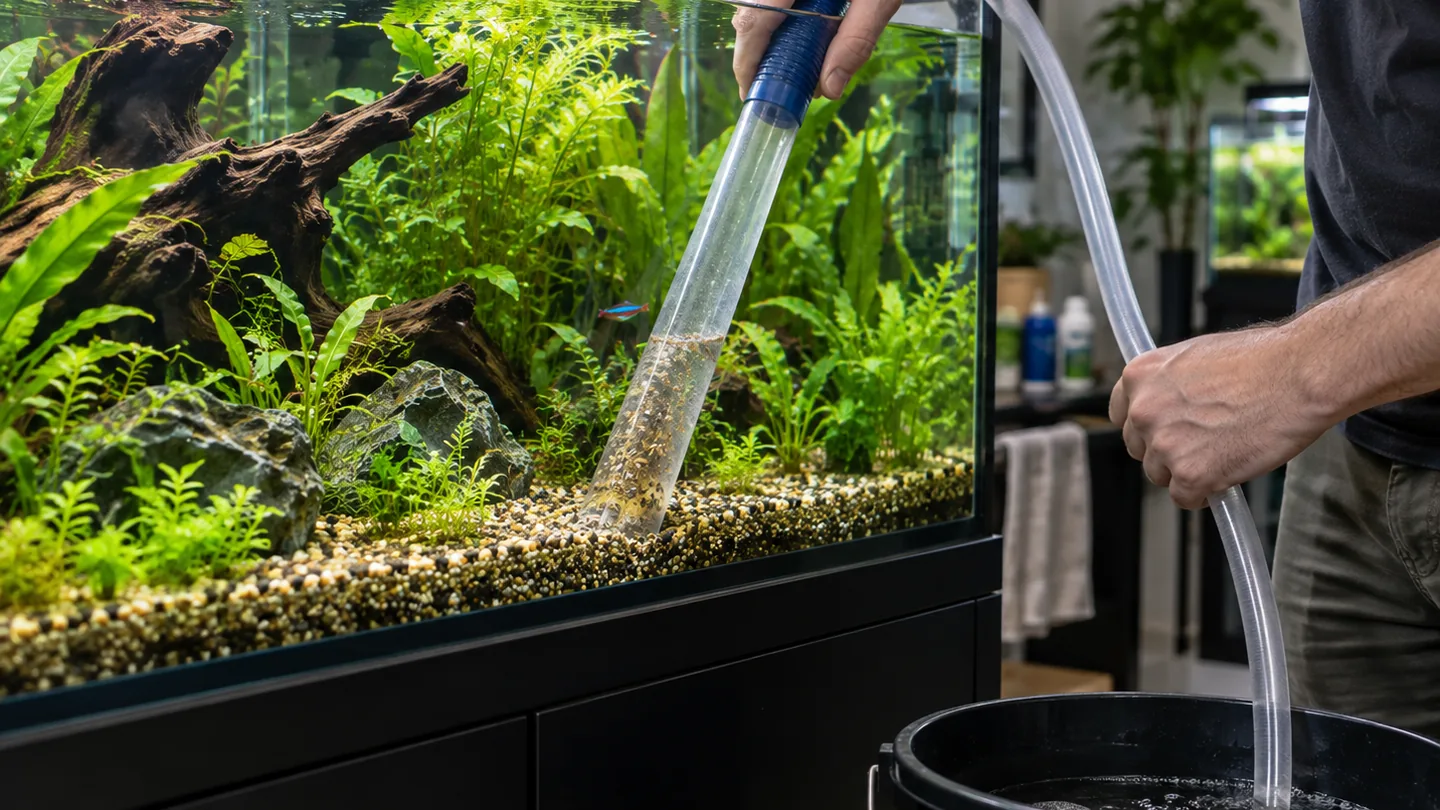
Where the beneficial bacteria actually live
The densest useful population is normally in biological filter media because it receives constant oxygenated water and a steady waste supply. Bacteria also colonise substrate, decor and glass.
Only a small fraction is suspended in the water column, so removing part of the water does not remove the cycle.
When water changes are useful during cycling
- Fish-in cycling when ammonia or nitrite is detectable.
- An accidental ammonia overdose during fishless cycling.
- Nitrate has accumulated heavily before livestock is added.
- pH or mineral conditions need correction through appropriate source water.
- A contaminant needs dilution.
What can actually damage the cycle during a water change
Untreated chlorine or chloramine can harm nitrifying organisms. Large temperature or chemistry shocks can also stress livestock and alter bacterial activity.
Condition replacement water as appropriate and avoid simultaneously deep-cleaning or replacing all filter media.
Should you avoid changes in fishless cycling?
Some fishless protocols minimise water changes until the end because the chemistry is controlled and no fish need protection. Others use changes if ammonia, nitrite or nitrate becomes excessive.
Follow the method you selected rather than treating 'never change water' as a universal law.
Do water changes slow bacterial growth by removing ammonia?
They can reduce the dissolved ammonia concentration, but that is not the same as removing bacteria. In a fishless cycle you can redose according to the chosen method after a necessary change.
In a fish-in cycle, protecting fish from toxic exposure is more important than maintaining a high ammonia concentration.
Related aquarium tools and guides
Frequently asked questions
Will a 50% water change reset my cycle?
No, not if the filter media and other biological surfaces remain healthy and the new water is properly conditioned.
Should I do water changes during fish-in cycling?
Yes. If ammonia or nitrite is detectable, water changes are one of the main tools for reducing exposure while the filter matures.
Can untreated tap water harm beneficial bacteria?
Yes. Chlorine and chloramine are disinfectants and can damage the biological filter. Use an appropriate conditioner.
Sources and further reading
This guide separates general aquarium arithmetic from fish-welfare decisions. For species-specific limits, always check the needs of the fish you intend to keep.