Before measuring
Decide whether you need geometric capacity, actual water volume, substrate quantity or full installation weight. Each question needs a different set of inputs.
Good calculator outputs start with measurements that match the physical quantity you are trying to estimate.

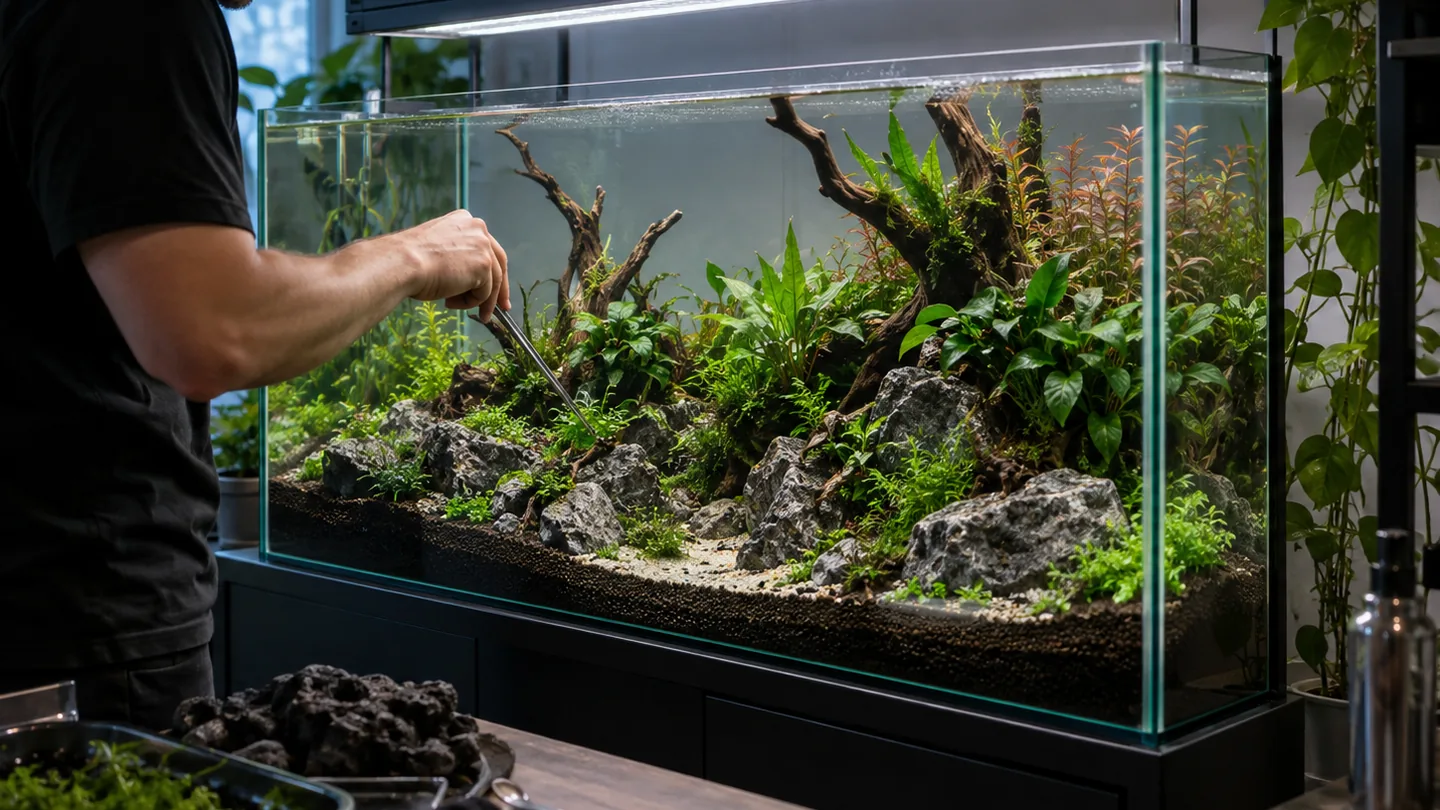
Decide whether you need geometric capacity, actual water volume, substrate quantity or full installation weight. Each question needs a different set of inputs.
Measure internal length, internal width and actual water height. Note large internal objects that displace water.
Original diagram supporting the aquarium measurement checklist explanation.
Measure the base footprint and estimate the average depth, especially if the bed slopes.
Gather manufacturer empty-tank and stand weights where available, plus substrate bag weights and significant hardscape mass.
Recording the exact dimensions and assumptions lets you repeat or revise the calculation later instead of guessing what the original number meant.
Write down internal length, internal width, glass height, normal water height, substrate depth at the front and back, and any large hardscape that materially reduces water space. Add the manufacturer model and nominal capacity if known. Keeping those numbers together saves re-measuring every time you calculate a water change, substrate order or equipment comparison.
Internal length × internal width × actual water height, with a separate displacement allowance if needed.
Internal footprint plus the average bed depth, especially if the bed slopes.
Actual water litres plus the empty tank, stand, substrate, hardscape and equipment masses.
Use realistic water volume rather than the marketing name of the aquarium.