Continuous equipment
Filters and pumps often run around the clock. Their rated watts can usually be multiplied by 24 hours for a simple daily energy estimate.
Separate continuous loads, scheduled loads and thermostatic loads before applying your electricity tariff.

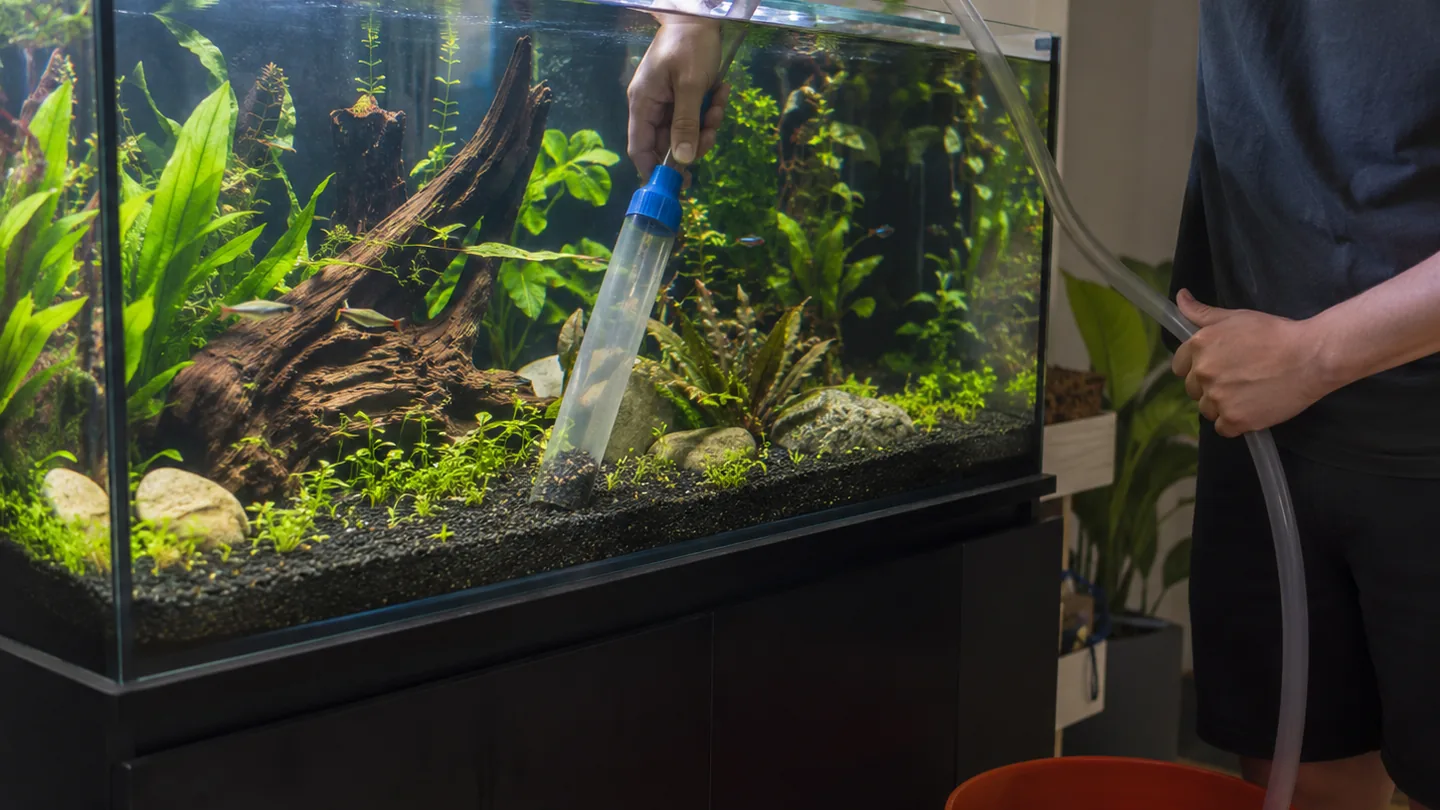
Filters and pumps often run around the clock. Their rated watts can usually be multiplied by 24 hours for a simple daily energy estimate.
Lighting is normally active for a defined period, so use wattage × lighting hours rather than 24 hours.
Original diagram supporting the aquarium running-cost planning explanation.
A heater cycles on and off. Duty cycle depends on room temperature, target water temperature, insulation, lid, airflow and season.
Convert watt-hours to kilowatt-hours by dividing by 1,000, then multiply by your tariff. Keep pence and pounds consistent.
A plug-in energy monitor captures real cycling and equipment behaviour and is the best way to replace estimates with measured consumption.
For equipment that runs continuously at a steady wattage, daily energy is watts × 24 ÷ 1,000. Timed lights use watts × hours ÷ 1,000. Thermostatic heaters need a duty-cycle estimate or, better, a measured energy figure because they switch on and off.
Once you have daily kWh, multiply by your own tariff. Keeping the calculation in kWh first makes it easy to compare equipment without baking a particular electricity price into the article.