A 75 gallon aquarium is flexible enough for large schools of small fish, medium community species, robust planted communities or carefully chosen feature fish. Compared with a typical 55 gallon, the added depth gives more turning room and hardscape options. Compatibility, adult size and territorial behaviour remain the real limits, so plan around the largest or most demanding species first.
At 75 gallons, the tank begins to feel spacious in more than one direction. That extra depth is useful for both fish movement and aquascape design, but it should be used to improve welfare rather than simply maximise numbers.
Start with the largest commitment
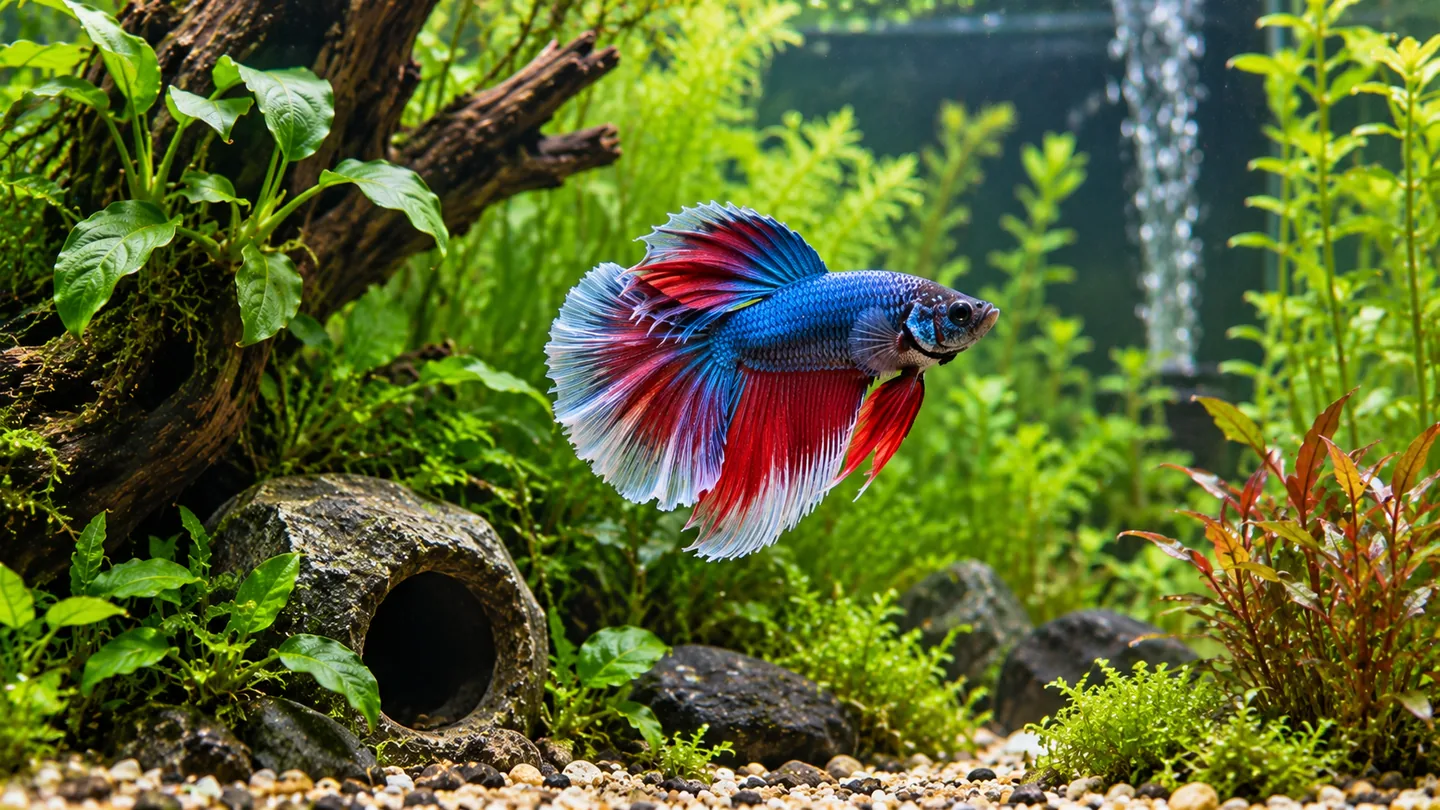
If the plan includes a medium feature species, design the tank around its adult size, territory and water needs first. Add smaller community fish only if they remain compatible.
Larger schools become possible
Social fish often show more confident behaviour in larger groups. A 75 gallon can support a substantial cohesive school while leaving room for other compatible layers.
Use depth for structure
Front-to-back room lets you build hardscape with foreground and background zones without consuming all swimming space.
Do not confuse capacity with compatibility
A bigger tank reduces some space pressures but does not make predation, aggression or conflicting water requirements disappear.
Related aquarium tools and guides
Frequently asked questions
Is a 75 gallon much more flexible than a 55?
Usually yes because it offers more front-to-back depth as well as substantial volume.
Can I keep larger fish in a 75 gallon?
Some medium species, yes, but adult dimensions and behaviour must be checked individually.
Can a 75 gallon be overstocked?
Absolutely. Large water volume does not remove waste, oxygen, territory or compatibility limits.
Sources and further reading
This guide separates general aquarium arithmetic from fish-welfare decisions. For species-specific limits, always check the needs of the fish you intend to keep.