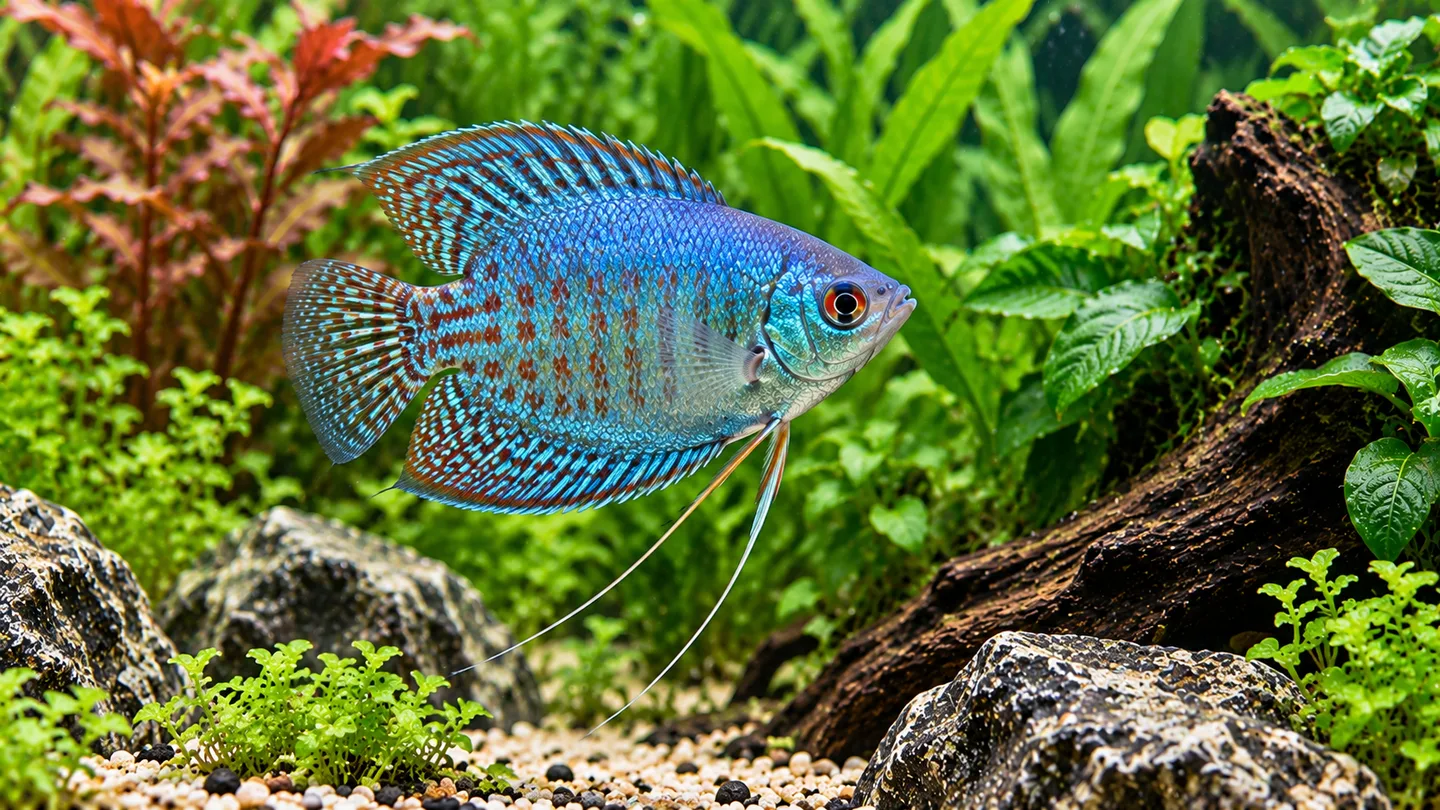
A 29 gallon aquarium can support a balanced community of small tetras or rasboras, a suitable group of small Corydoras, and one compatible focal species such as a peaceful gourami where water chemistry and temperament fit. The exact combination depends on adult size, tank dimensions, group requirements and filtration. Do not treat every fish that individually 'fits 29 gallons' as compatible with all the others.
At 29 gallons, beginners finally have enough water volume to create distinct swimming layers without pushing every part of the tank. The best result still comes from a simple plan rather than a long shopping list.
A useful three-layer structure
- One mid-water shoal of genuinely small community fish.
- One bottom group suited to the footprint and substrate.
- One focal fish or pair only if territorial behaviour and water chemistry fit.
Keep shoals whole
If a species needs a group, give it a proper group before adding a second schooling species. The RSPCA notes that many tetras, rasboras, danios, rainbowfish and catfishes are social and should be kept in groups.
Use the 29 gallon height sensibly
The tank is taller than many long-style aquariums, so vertical planting can create cover, but active fish still need open horizontal lanes.
Leave room for adults
Stock from expected adult size, not the size in the shop. Juveniles grow, and the visual emptiness of a new tank is not a reason to overfill it.
Related aquarium tools and guides
Frequently asked questions
Can a 29 gallon hold two schools?
Sometimes, but one larger cohesive school plus a compatible bottom group is often simpler and more natural.
Is a 29 gallon good for beginners?
Yes. The extra water volume gives more stability than small tanks while remaining manageable.
Can I keep a pleco in a 29 gallon?
Only species whose adult size and waste output suit the tank. Common plecos become far too large.
Sources and further reading
This guide separates general aquarium arithmetic from fish-welfare decisions. For species-specific limits, always check the needs of the fish you intend to keep.