Aquarium planning

How to calculate aquarium volume properly

Use internal water dimensions, not just the outside of the glass or the model name.

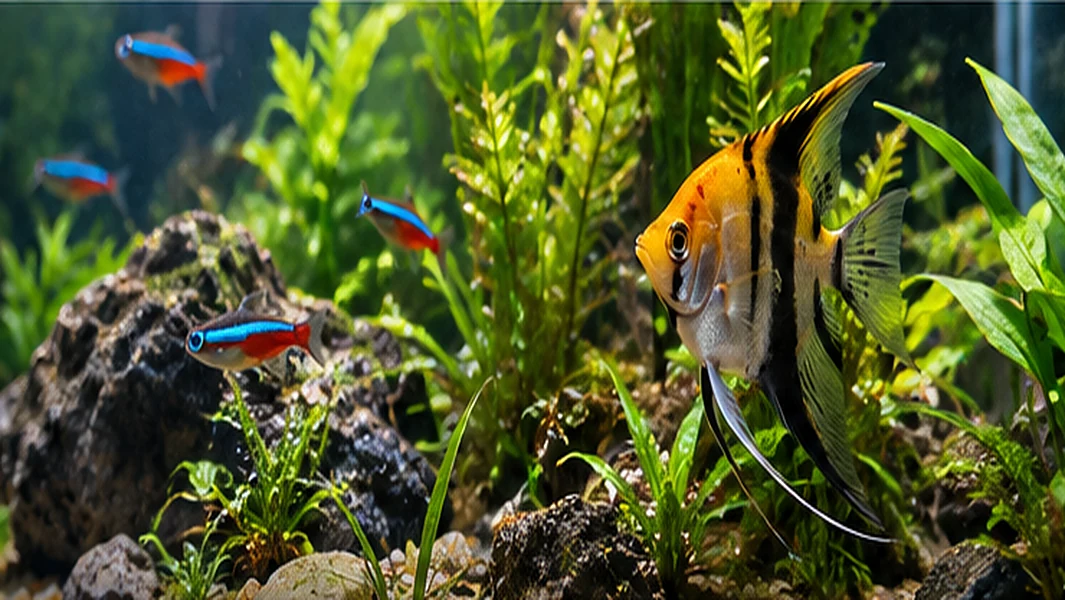
Photorealistic image of an angelfish in a planted freshwater aquarium

Start with the water space you actually have

The most useful rectangular-tank calculation uses internal length, internal width and the actual water height. External measurements include glass, trim and framing. Full glass height can include an air gap that never contains water.

Rectangular formula

Measure in centimetres, multiply length by width by water height and divide by 1,000. For example, 90 × 35 × 40 cm equals 126 litres before displacement.

Photorealistic image of an angelfish in a planted freshwater aquarium

Original diagram supporting the how to calculate aquarium volume properly explanation.

Then choose the correct gallon

One UK imperial gallon is 4.54609 litres. One US liquid gallon is 3.785411784 litres. A 126-litre tank is about 27.7 UK gallons but 33.3 US gallons, so simply saying “gallons” can create a large error.

Measure consistently

Keep the tape square, measure to the real water line and decide whether you need geometric water space or an estimate after displacement. For cylinders and bow-front tanks, use the appropriate shape formula or manufacturer data rather than forcing rectangular maths.

What the answer is for

Volume is useful for percentage water changes, filter-flow comparison, water-mass estimates and product instructions. It does not replace species-specific care or compatibility research.

Related tools

Three checks that prevent most volume errors

  1. Measure the water space inside the glass.
  2. Use the real water line, not the top rim.
  3. Keep gross geometric volume separate from any displacement estimate.

If a result looks surprising, repeat those three checks before changing the formula. A calculator cannot correct a measurement taken from the wrong physical points.